Por Ken Accardi
Un estudio del Promotion Optimization Institute (POI) revela que las deficiencias en el proceso de planificación de cuentas (AOP) son una de las principales causas de las desviaciones en el gasto comercial y del incumplimiento de los objetivos comerciales. BlueRGM, de UpClear, da soporte en todas las fases del AOP, desde la asignación estratégica del presupuesto y las directrices de planificación hasta la planificación de cuentas a nivel de cliente, lo que ayuda a marcas como Danone, Utz, Warburtons y Hovis a elaborar planes más precisos, acortar los ciclos de planificación y mejorar la eficacia de las promociones.
La planificación operativa anual (AOP) es el proceso mediante el cual los fabricantes de productos de consumo envasados (CPG) y de gran consumo (FMCG) establecen objetivos de ingresos y gastos, asignan los presupuestos de promoción comercial entre clientes y productos, fijan directrices y límites para las promociones, y elaboran planes comerciales a nivel de cliente, todo ello antes de que comience el ejercicio fiscal. En este proceso participan los departamentos de finanzas, gestión del crecimiento de los ingresos (RGM), estrategia de ventas, gestión de cuentas clave, marketing comercial y la dirección ejecutiva, que trabajan siguiendo una secuencia estructurada. El resultado del AOP es el plan comercial que cada departamento debe ejecutar durante los doce meses siguientes. Un AOP bien elaborado garantiza la coordinación entre departamentos, la disciplina financiera y una base de planificación sobre la que los equipos de la cadena de suministro y de planificación de la demanda pueden elaborar sus previsiones. Un AOP mal elaborado da lugar a hipótesis erróneas, revisiones reactivas de las previsiones y sorpresas en el gasto comercial a final de año, algo que los equipos financieros temen.
Top-down budgeting in CPG/FMCG AOP connects enterprise revenue and margin goals to account teams in the sales organization. It is typically owned by finance, trade marketing, revenue growth management (RGM), and executive leadership, with key account management teams consulted to validate that targets are grounded in market reality. Best practice starts with a fact-based analysis of historical promotional ROI, lift trends, and margin contribution by customer and product, the baseline before any subjective adjustments are layered on. From this baseline, scenario modelling tests goal options, (e.g. conservative, base case, aggressive) with documented assumptions for new product launches, pricing changes, competitive activity, and macroeconomic factors. BlueRGM’s Compass solutions enables this top-down budgeting process, with scenario planning tools that model P&L impact across budget scenarios before targets are locked.
Promotional guardrails are the parameters set by sales operations, trade marketing , and/or RGM, and executive leadership to ensure that bottom-up customer plans remain aligned with strategic and financial objectives. Effective guardrails cover: maximum discount depth by customer or category (protecting pricing architecture), promotional frequency limits (preventing over-promotion that trains shoppers to wait for deals), and fixed fee caps (limiting commitments with no volume guarantee). The critical implementation principle: guardrails embedded in the planning system are enforced automatically; guardrails documented in a PDF are consistently ignored under deadline pressure. BlueRGM’s Compass module embeds guardrails directly into the scenario and account planning workflow, alerting account managers in real time when a plan breaches a threshold and routing exceptions through a configurable approval process with full audit documentation.
La planificación ascendente consiste en que los equipos de gestión de cuentas clave elaboren planes de promoción comercial específicos para cada minorista, los calendarios promocionales, las condiciones de precios, las previsiones de volumen y los compromisos de gasto que traduzcan el AOP descendente en acuerdos comerciales a nivel de cliente. Esto implica que los departamentos de ventas, marketing comercial, finanzas y gestión de ingresos trabajen de forma colaborativa dentro de los límites establecidos durante la elaboración del presupuesto descendente. Los equipos de cuentas de alto rendimiento utilizan la simulación de escenarios dentro de la solución Scenario Planning de BlueRGM para probar diferentes opciones promocionales, distintos niveles de descuento, diferentes ventanas temporales y diferentes mecánicas promocionales, y comparar su ROI previsto antes de comprometerse. Esto incluye predicciones basadas en el aprendizaje automático sobre el aumento promocional esperado y modelos de ROI entrenados con datos históricos de ventas de minoristas, NielsenIQ, Circana o SPINS, lo que reduce la dependencia de la intuición y mejora la calidad de las decisiones previas al compromiso.
Los cambios geopolíticos, las interrupciones en la cadena de suministro, las maniobras competitivas inesperadas y los cambios macroeconómicos pueden alterar de forma significativa el entorno comercial a mitad de año. Los procesos de planificación de operaciones (AOP) más resilientes del sector de bienes de consumo (CPG) incluyen un mecanismo formal de reestimación, con un umbral definido (normalmente una desviación del 5 % respecto al plan) que activa una revisión estructurada a mitad de año, en lugar de esperar hasta final de año para abordar un problema. Los informes y análisis de BlueRGM ofrecen visibilidad en tiempo real del ritmo de devengo frente al plan para cada cliente minorista y cada producto, lo que permite a los equipos de gestión de ingresos y finanzas identificar desviaciones y corregir el rumbo mientras aún hay tiempo para actuar. Las marcas de productos de gran consumo que utilizan la supervisión en tiempo real de BlueRGM reducen las desviaciones en el gasto comercial a final de año, pasando de una media del sector del 6-8 % del presupuesto a menos del 3 %.

Con sede en Los Ángeles, Ken Accardi es el responsable de ventas en Norteamérica. Ken cuenta con más de 25 años de experiencia en el sector de los bienes de consumo de gran consumo (CPG), y está especializado en ventas, gestión comercial, gestión de categorías, estrategia de ventas y optimización de procesos empresariales. Ken cuenta con experiencia en el ámbito interno de fabricantes, socios y proveedores líderes, como Bayer Consumer Healthcare, Johnson & Johnson, Clarkston Consulting y Kantar Xtel. Ken ha dedicado la última década a colaborar con docenas de fabricantes de bienes de consumo en la identificación de soluciones, su implementación y el soporte técnico para las capacidades de TPM, TPO y RGM. En su tiempo libre, le gusta pasar tiempo con su hija y hacer senderismo por las numerosas rutas del sur de California.
En UpClear, nuestra misión es ayudar a las marcas de bienes de consumo a maximizar sus ingresos y la rentabilidad de sus inversiones comerciales mediante un software inteligente y colaborativo, que ofrece una única fuente de información fiable, una automatización optimizada e información útil.
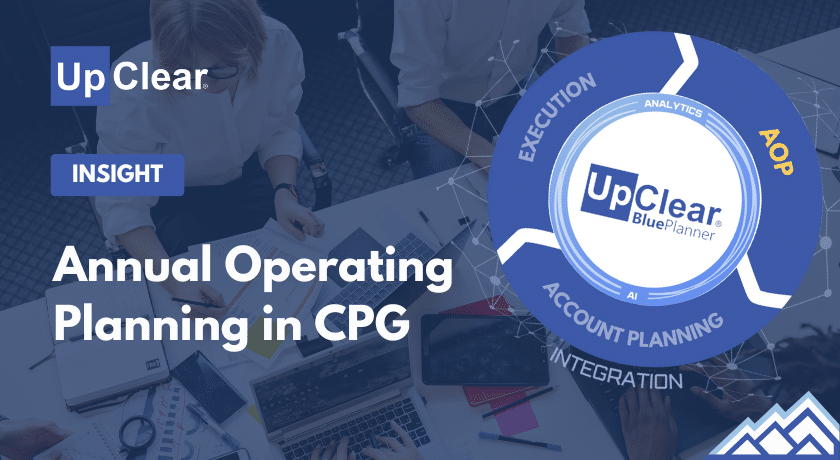
El software de gestión de ingresos BluePlanner da soporte a los procesos de principio a fin, desde la planificación operativa anual hasta la planificación y ejecución de cuentas.