
Importa los precios de los clientes utilizados en BluePlanner. Planifica los contratos a largo plazo sin promociones y otros costes para realizar una previsión completa del coste de atención al cliente.
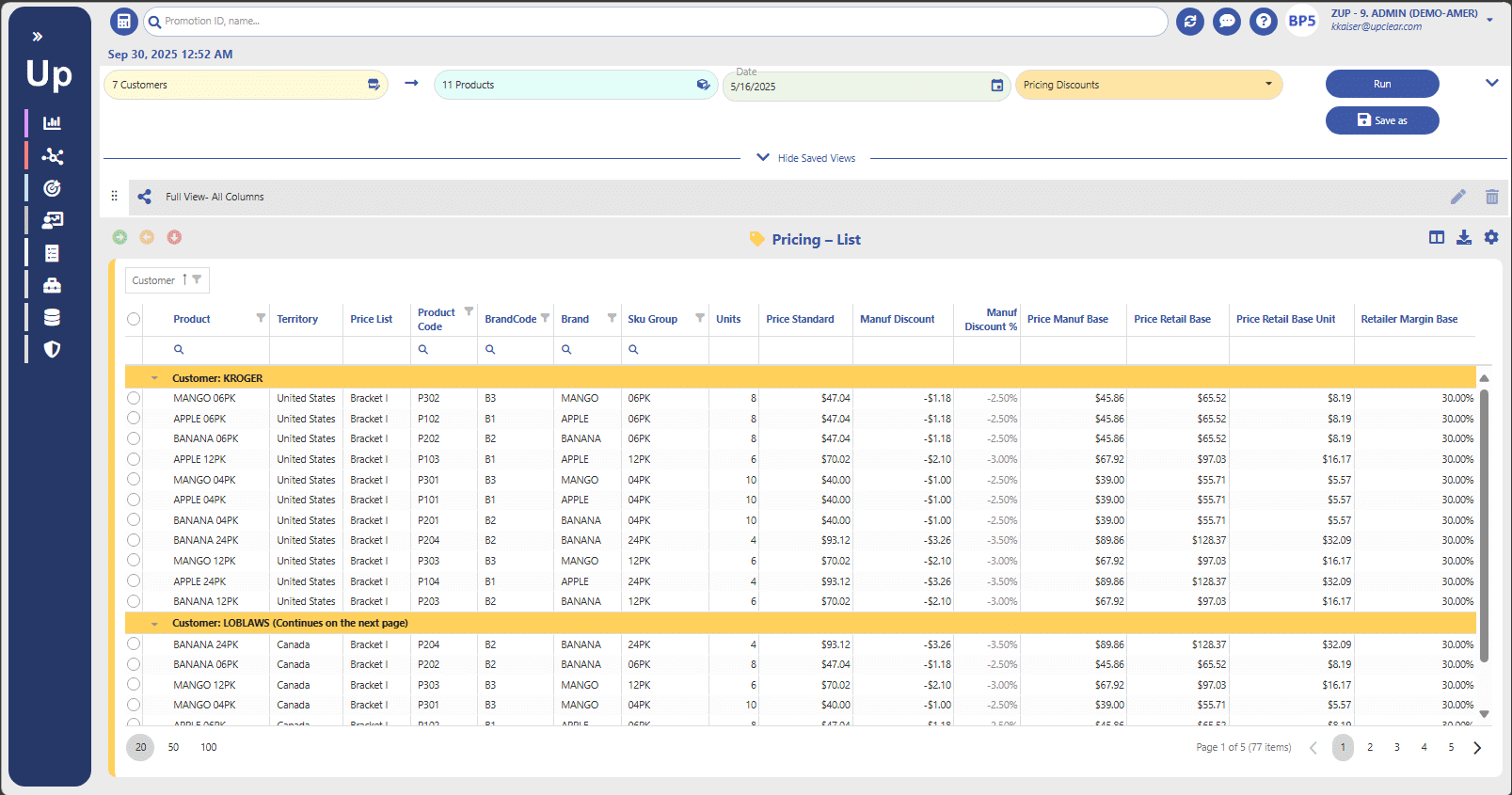
Al crear planes de cuentas en BluePlanner, primero realizamos una previsión y, a continuación, actualizamos los ingresos, los gastos y otros indicadores clave de rendimiento (KPI). También transferimos las condiciones de precios (es decir, el descuento facturado) desde BluePlanner a tu sistema de planificación de recursos empresariales (ERP). Todo ello depende de que se disponga de precios precisos en el platform. Dado que cada marca tiene necesidades y requisitos distintos, hemos desarrollado, con el tiempo, amplias capacidades en materia de fijación de precios.
En primer lugar, los precios se pueden introducir y gestionar directamente en BluePlanner. Aunque normalmente los precios se crean y gestionan en el ERP, en algunos casos los clientes han fijado los precios en BluePlanner y luego los han extraído para utilizarlos en otros sistemas. Lo que hace que esta opción resulte atractiva es el motor de flujos de trabajo integrado en BluePlanner, que facilita la aprobación de los precios propuestos y de los cambios de precios.
En lo que respecta a la importación, admitimos múltiples escenarios. Dentro de un territorio (es decir, un país), podemos importar un único precio de catálogo «universal», varias listas de precios (por ejemplo, tramos de precios, precios para Alaska o Hawái, etc.), descuentos para clientes gestionados en otros sistemas y/o precios de catálogo específicos para cada cliente.
La capacidad de BluePlanner para gestionar varios territorios dentro de un mismo dominio también permite gestionar los precios para varios países y la conversión de divisas.
Los minoristas u operadores que compran productos a un distribuidor (clientes «indirectos») adquieren dichos productos a un precio que incluye un recargo. Los precios en BluePlanner reflejan esta situación. A la hora de planificar promociones para clientes indirectos, se tienen en cuenta ambos precios. Se muestra el precio que paga el distribuidor, que se utiliza para calcular las cifras financieras de la marca. También se muestra el precio que el cliente indirecto paga al distribuidor, que incluye un recargo. Las bonificaciones por reembolso se introducen sobre este precio, y este precio se utiliza para calcular las métricas financieras del minorista.
Otro aspecto importante para el análisis de precios entre clientes y productos es el precio de venta al público previsto. BluePlanner permite establecer o importar precios de venta al público de la misma forma en que se gestionan los precios de los clientes.
UpClear y BluePlanner admiten diferentes métodos de importación y exportación. Entre ellos se incluyen las API, el intercambio de archivos planos mediante SFTP y el uso autónomo de una herramienta de carga. Consulta nuestra página «Data Enablers» para obtener más detalles.

Estamos aquí para ayudarte.
[email protected]