Demand forecasts import directly into Blue RGM's Consensus Forecast for a side-by-side comparison against the bottom-up sales forecast.


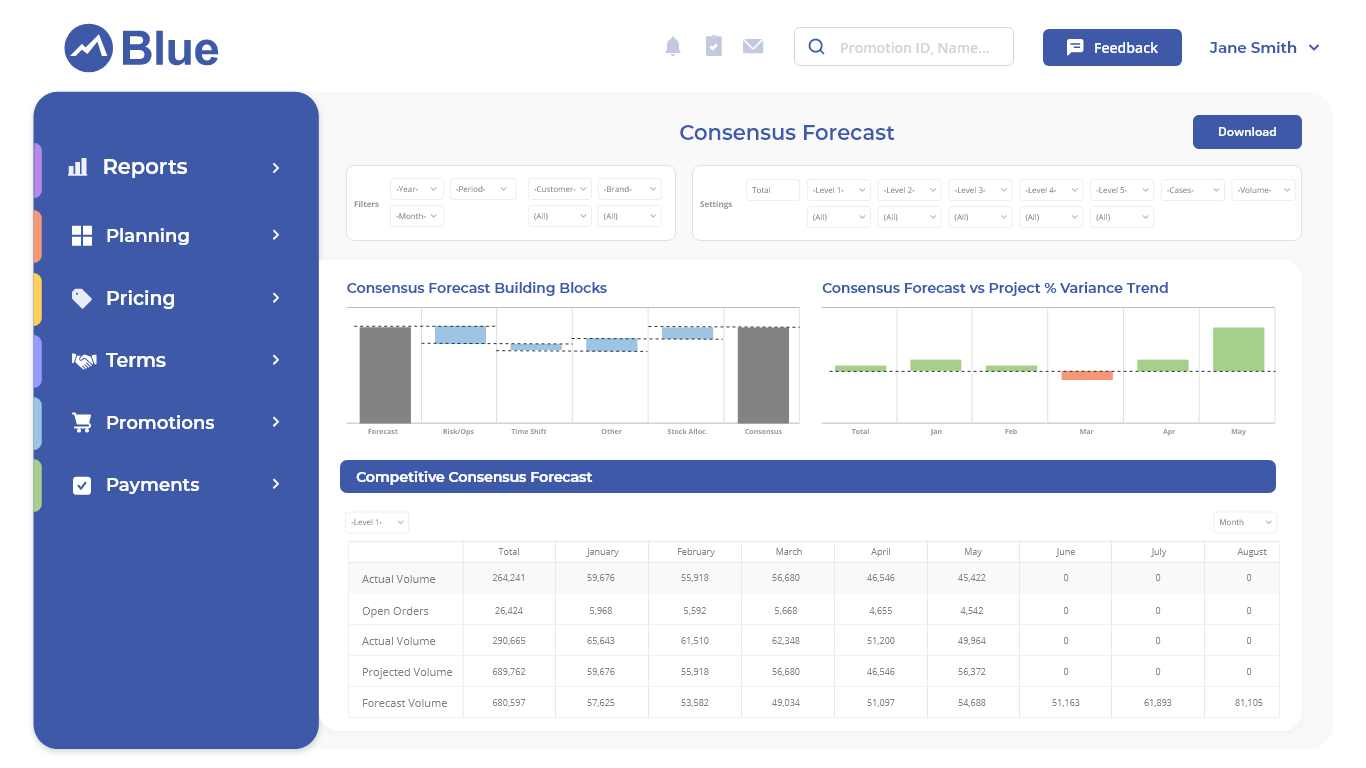
Produce a volume forecast finance and demand planning can trust. Start with bottom-up forecast from account teams and augment with HQ team's knowledge. Import other reference metrics for comparisons. Pair the flexibility of spreadsheets with the structure of Blue. Use integration to export your forecast to Demand Planning tools.
Every adjustment to the bottom-up forecast stays visible and documented
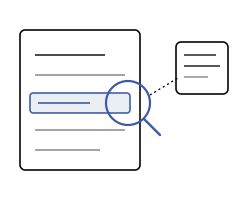
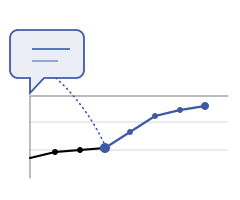
Forecasts reflect what sales actually expects, not just a historical trend line
A well-documented sales input means fewer surprises hit demand planning and supply chain later
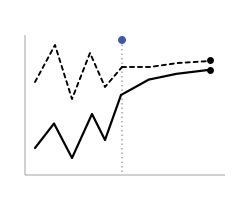
Account teams build a structured, detailed sales forecast at the lowest level of the customer, product, and time hierarchies you use, creating a reliable source for the sales team's input.
Demand forecasts import directly for a direct, side-by-side comparison against the bottom-up sales forecast.
Headquarters teams layer in adjustments the bottom-up forecast doesn't capture, including- for example- future price changes, time shifts, risks and opportunities, and allocations.
Demand Planning can access the forecast directly, or an extract can be sent to supply chain software, keeping the sales input connected to downstream planning.
With Blue RGM's Consensus Forecast, the sales number is built bottom-up at the account, product, and time level. From there, it documents every adjustment sales makes on top of it.
Consensus Forecast in Blue RGM enhances the bottom-up forecast by layering in adjustments for price changes, risks and opportunities, and allocations before the forecast heads into consensus.
A documented, adjusted sales input means demand planning and supply chain are working from the same picture sales already agreed on.
Demand forecasts import directly into Blue RGM's Consensus Forecast for a side-by-side comparison against the bottom-up sales forecast.