

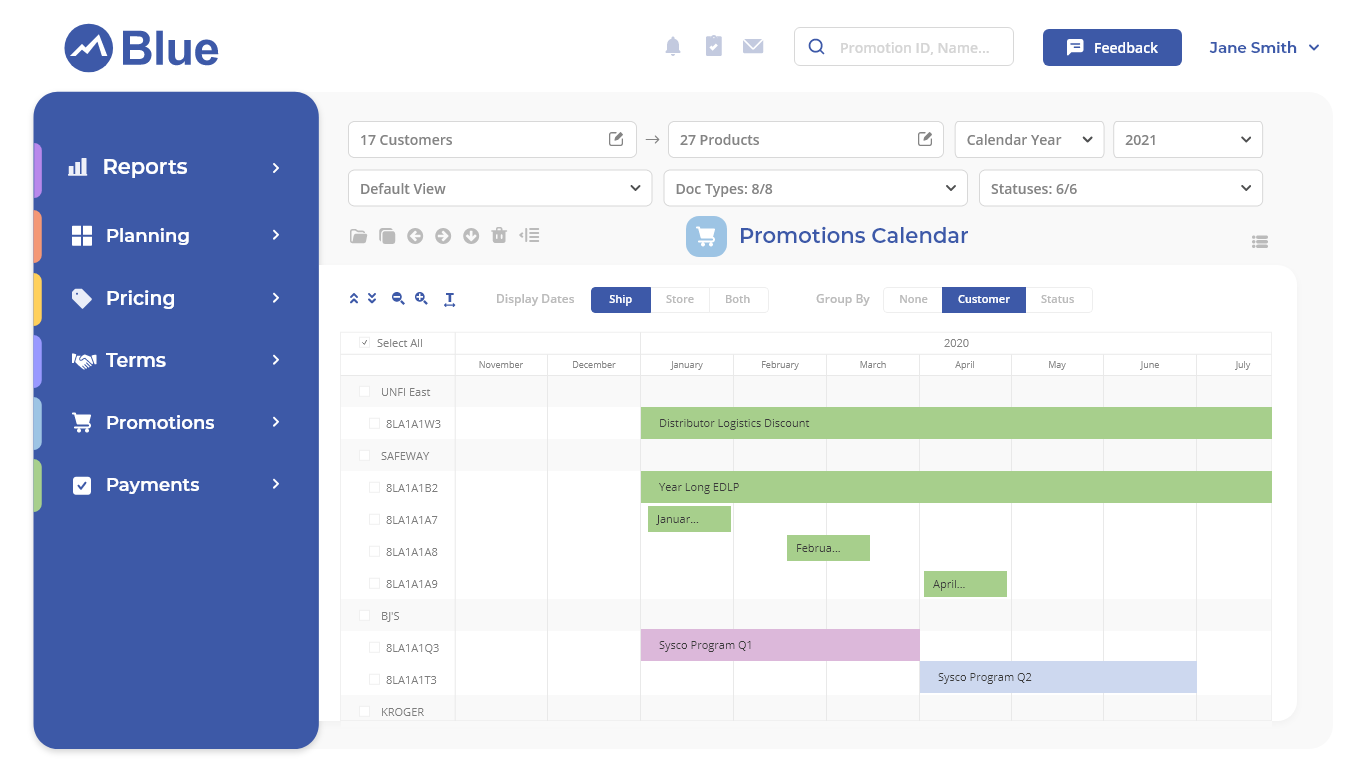
Headquarters sets the expectations for discount levels, frequency and more. Rules working together with planning so account teams plan freely but get immediate visibility to exceptions.
Business rules live where account teams plan, not in a separate policy document
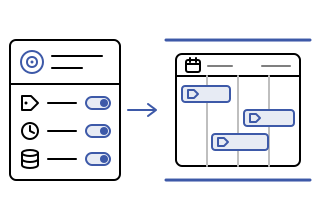
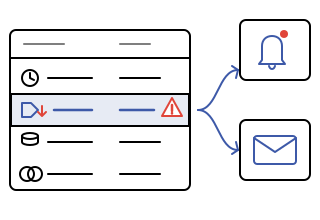
Discount levels, frequency, price floors, overspent funds, and missed lead times surface as alerts, not surprises
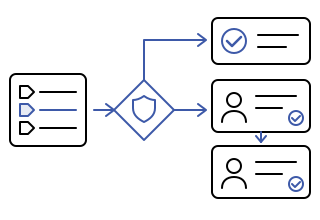
Plans that meet the rules flow through; only rule breaks enter the approval trail
Choose from more than 80 business rules covering pricing, promotion type and frequency, spending, lead times, and other attributes. Examples include minimum lead time, minimum price violated, promotion cost increase, overspent fund, overlapping promotions, promotion not settled, and presence of attachment.
Platform notifications and emails fire when a planned activity breaks a business rule, so the right people know immediately.
Multi-level, rule-based approvals route offending plans through the approval trail you define, with configurable statuses at each step.
Prevent status changes until conditions are met, such as requiring a contract attached before a promotion can advance, or a workflow kickoff when old promotions remain unsettled.
Rules cover pricing, promotion type and frequency, spending, lead times, and other attributes. The library includes more than 80 guardrails, from minimum lead time and price floors to overlapping promotions and required attachments.
The platform sends a notification or email, and the plan follows the established workflow approval trail. Plans within the rules proceed without interruption.
Yes. Workflow approvals are rule-based and multi-level, with configurable statuses, so different rule breaks can route to different approvers.
Planning terms alongside promotions gives a customer-specific forecast of all spending, trade and non-trade. That total cost-to-serve view feeds directly into customer investment strategy.
Trade marketing sets the rules that define acceptable activity, and finance gains confidence that price floors, spend limits, and settlement requirements are enforced at the point of planning.