

En nuestra primera Cumbre de Datos del Sector de Bienes de Consumo (CPG), celebradael 13 de mayo de 2026, dimos la bienvenida en nuestra oficina de Nueva York a profesionales de operaciones de ventas, marketing comercial, análisis y datos de todo el país. Aprovechando el impulso de nuestras cumbres sobre deducciones y RGM, este evento centró la atención en los datos en sí mismos: el elemento fundamental que subyace a todo, desde la planificación comercial hasta el RGM.
A lo largo de una jornada completa de sesiones y mesas redondas, profesionales y expertos abordaron los retos reales relacionados con la calidad de los datos, la integración, la gobernanza y el papel emergente de la inteligencia artificial en las operaciones comerciales del sector de los productos de gran consumo.
We gathered some top takeaways from the conversations, case studies, and debates that took place over the course of the event.
Across every session, one theme returned with striking consistency: most data problems in CPG commercial operations are not technical failures — they’re structural ones. Bad master data, unclear ownership, and the absence of governance frameworks were cited as the root cause of everything from ROI analysis gaps to deduction disputes to forecasting disconnects.
Don Baker of The Partnering Group was direct about what he sees across his clients:
Don walked the room through the three pillars of master data readiness — the Pricing, Product, and Customer dimensions — and the specific failure modes that compound over time when governance is absent. These included: EDLP allowances hidden inside ERP pricing rather than planned and identified as customer spend, PPG structures that don’t follow TPM entry rules, check digit items shipped without billing, and customer hierarchies that don’t match external syndicated definitions.
The implication: organizations that skip governance frameworks aren’t just leaving insights on the table — they’re actively generating misleading ones.
One of the most provocative reframes of the day came from Don Baker in the opening session: the scope of RGM is wider than most organizations are treating it. With retailers now functioning as media companies, fines and fees reaching 2–3% of gross sales at some companies, and digital trade investment increasingly hard to separate from traditional trade spend, the boundary between “above” and “below” the net sales line is dissolving.
Earnings Before Interest & Taxes (EBIT) is a company’s profit from core operations before accounting for interest and tax expenses. This framing matters for data strategy: if you’re only capturing promotional spend and scan allowances in your trade system, you’re missing the full picture of what you’re investing in each customer relationship. Don also raised a pointed challenge around everyday pricing: at many of his clients, 70–80% of trade spend is going to everyday allowances — and almost nobody is running ROI analysis on it.
The room recognized this gap. As one participant noted, getting customer profitability right requires solving for the data first: “You’ve got salespeople making deals and not really knowing what they’re giving away. At the end of the day, customer profitability looks very different.”
Marine Bibal, co-founder of EasyPicky, introduced a concept that resonated strongly with attendees: the freshness gap. CPG brands are meticulous about product freshness, yet routinely monitor promotions on stale data — sometimes receiving execution information weeks after the promotion window has already closed.
Marine shared concrete examples of how execution reality diverges from plan reality: a beautifully designed snack brand Christmas display positioned at the back of the store where no shoppers could see it; a soft drink promo display placed directly next to its biggest competitor. In both cases, IPOS systems reported the display as live, and post-promo reports showed underperformance with no clear explanation.
Her prescription: make every store visit a data event. With image recognition technology working through video and full offline capability, teams can now access KPIs in real time while the field rep is still in the store — allowing discrepancies to be corrected before leaving, not just reported after the fact. She introduced four questions that her customers now embed into every promo brief:
1. Was the display actually built, and where in the store?
2. Was the promo price tag correct from day one?
3. Was the product in stock throughout the promo window?
4. What was the promo right next to mine?
Hands went up when asked who in the room had experience with in-store image recognition. Several attendees cited use cases in planogram compliance and competitive shelf auditing. Promotion compliance remains an emerging capability, but one with clear upstream implications for trade planning and ROI integrity.
UpClear’s Kurt Kaiser brought a candid vendor perspective to the day: Gartner survey data puts TPM satisfaction at troublingly low levels, and a significant contributor is the gap between what platforms can do and what they’re actually being used to do. For many organizations, the end state is a well-maintained trade system — and an equally well-maintained Excel file created to manage work-arounds.
The culprit, in many cases, is incomplete data integration. Upstream data loads (customers, products, prices, shipments) tend to be well managed. Where things fall apart is in the downstream: distributor depletion data and retail sales. When asked how many people have retail sales integrated into their trade planning, only a small minority of the room raised their hands.
Andrew Dentinger, Product Management leader at UpClear, walked through why this is hard — and how AI is starting to help. The process of taking raw retail sales data through cleansing, labeling, augmentation, and harmonization is labor-intensive, error-prone, and full of CPG-specific nuances (interpacks, combo SKUs, check digits, mismatched hierarchies) that off-the-shelf tools don’t understand.
UpClear’s approach uses layered AI techniques — from exact matching to forward/backward pass filtering to confidence scoring — to accelerate product harmonization and data preparation, while preserving a human override at every step. The modeling itself, Andrew noted, is increasingly commoditized. Copilot and similar Large Language Model (LMM) tools can run a price elasticity analysis on a clean spreadsheet in seconds. Getting to that clean spreadsheet remains the hard part.
Throughout the day, the conversation about AI kept returning to the same guardrail. Across the opening discussion, Andrew’s data readiness presentation, and Don’s closing governance session, speakers converged on a shared thesis: AI amplifies what’s already there — good or bad. It will not fix a broken process. It will not flag dirty data. It will give you a confident answer based on whatever it’s been handed.
Don drew a direct line from this to organizational behavior: when companies realize AI-driven productivity savings, they often take it as a one-time headcount reduction rather than reinvesting in the critical thinking roles that can actually capture value from it. His recommendation: reapply those savings to data and analytical functions that can put AI to work properly.
Andrew was similarly measured about the technology itself: for most CPG use cases, simple regression and statistical models that are decades old will outperform cutting-edge LLMs — because the data environments are small and bounded. “You have 104 weeks of Nielsen data to work with. You aren’t looking at sentiment analysis across billions of observations in a social media feed.”
The practical upshot, endorsed across sessions: start with governance. Get master data right. Define what you’re trying to measure and why. Then consider whether AI is the right tool for a given step in the process — and always keep a human in the loop.
Thierry Soudee — UpClear, fundador y director ejecutivo
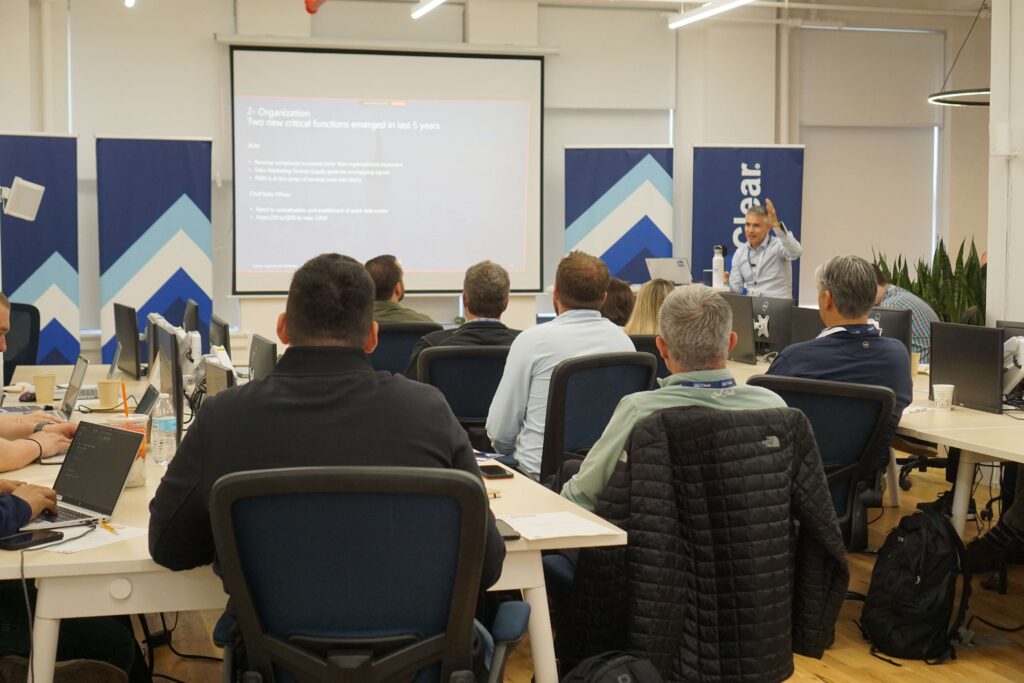
Thierry abrió la jornada con un análisis basado en datos sobre cómo ha evolucionado el papel del director de datos (CDO) en el sector de los productos de gran consumo (CPG): desde la gestión de sistemas hasta la gobernanza, el enfoque centrado en los productos de datos y la supervisión de la inteligencia artificial. Puso en contexto la magnitud de la explosión de datos a la que se enfrentan las marcas del segmento medio del mercado, destacó la aparición del director de gestión de riesgos (RGM) como una función imprescindible y sentó las bases para los debates de la jornada en torno a la calidad de los datos, la confianza y la rapidez en la toma de decisiones.
Don Baker — The Partnering Group

Don aportó a sus dos sesiones años de experiencia en consultoría de RGM y la franqueza propia de un profesional con experiencia práctica. En la primera, repasó las áreas de preparación de los datos maestros relacionadas con los precios, los productos y los clientes, con casos prácticos, recomendaciones sobre lo que se debe y no se debe hacer, y un reto constante para los asistentes: definir correctamente el lenguaje de los impulsores de negocio antes que el lenguaje financiero; de lo contrario, vuestro sistema comercial nunca cumplirá su propósito.
Marine Bibal — EasyPicky, cofundadora
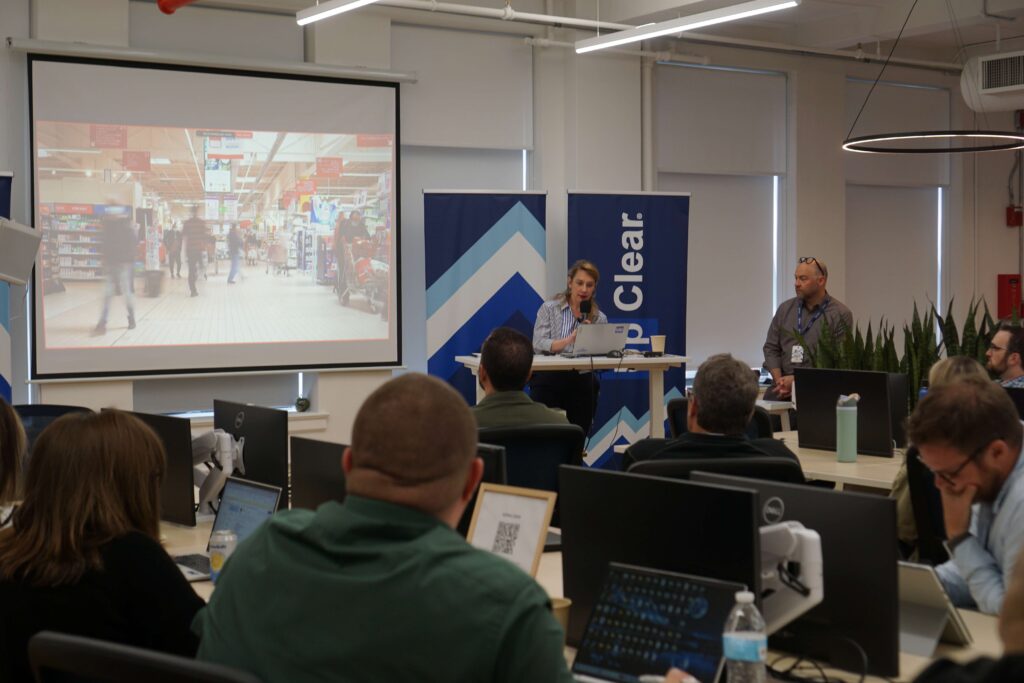
Marine presentó el concepto de la «brecha de frescura» en los datos de ejecución de las promociones: el desfase que existe entre el momento en que se lleva a cabo una promoción y aquel en que las marcas obtienen información sobre cómo se ha ejecutado realmente en el lineal. Compartió ejemplos reales de planes de promoción que parecían perfectos sobre el papel, pero que fracasaron en la tienda, y esbozó un marco para integrar datos cualitativos de ejecución en el proceso de planificación de las promociones.
Andrew Dentinger — UpClear, director de producto
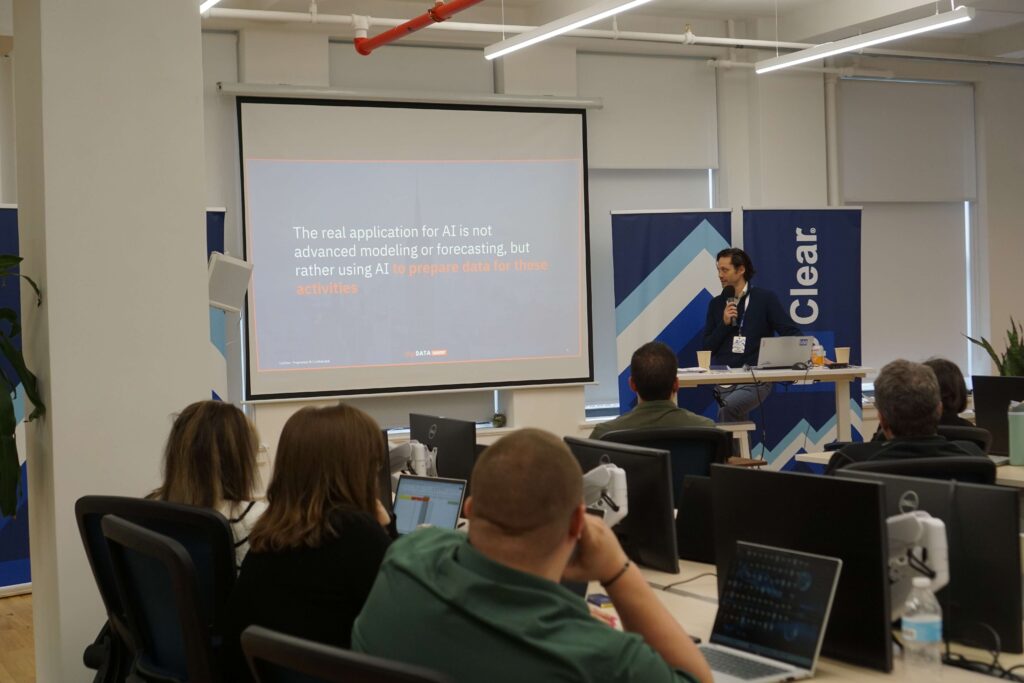
Andrew ofreció una visión general realista de lo que realmente significa la preparación de datos, analizando la detección de anomalías, la tokenización, los retos de la correspondencia de productos y el papel de los datos sintéticos. También aportó una perspectiva sincera sobre la IA: en el sector de los productos de gran consumo (CPG), el valor no reside tanto en los modelos generativos avanzados como en el uso de la IA para limpiar, etiquetar y preparar los datos para la modelización —un paso que la mayoría de las organizaciones siguen realizando manualmente—.
Don Baker — The Partnering Group
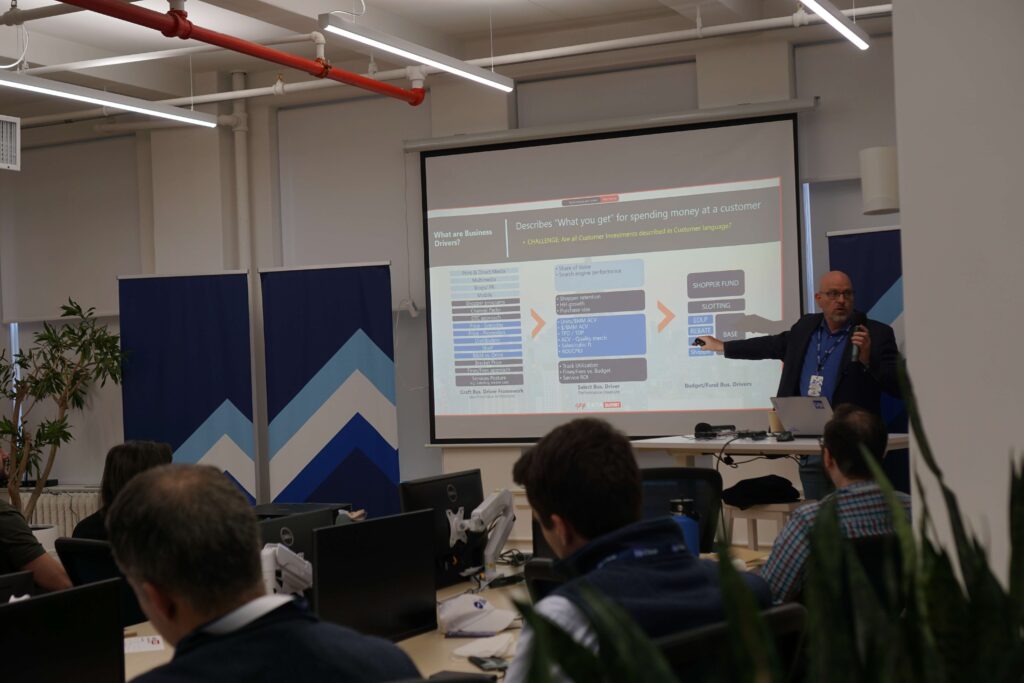
En su segunda sesión, Don relacionó la estrategia de datos con el diseño organizativo, las estructuras de gobernanza y los aspectos prácticos para dar los primeros pasos, incluso en el caso de equipos pequeños. Compartió su propia estructura de gobernanza de datos maestros en Sara Lee, explicó la gobernanza basada en formularios de registro como punto de partida y concluyó con una serie de recomendaciones sobre la estrategia de precios en el contexto de la actual incertidumbre en torno a los aranceles y los costes del combustible.