
We had a great time in Dallas at our second annual Deduction Summit— a dedicated forum designed for mid-market consumer-goods finance, accounting, and trade teams. We were excited to host attendees from dozens of leading brands to exchange real-world deduction-management strategies, and to uncover how to reclaim lost bottom-line dollars.
This year’s Deduction Summit was packed with insightful presentations and engaging discussions surrounding challenges and best practices in the deduction space.
And while you can’t match the experience of attending in-person, there are some valuable learnings we’re taking away to inform our day-to-day processes and broader strategic decisions.
Retailers and distributors are increasing automation and compliance enforcement.
Despite the progress that CPG tech is making in the deduction space, deduction challenges are only going to increase over time. Kyle Barnholt from TrewUp demonstrated that trade deductions at UNFI & Kehe increased by 10% from 2024 to 2025, mainly driven by promotion and spoils.
While manufacturers deploy automation to work through deductions and disputes, retailers are simultaneously using AI to speed up deduction generation and auto-deny disputes. Documentation, meanwhile, remains hard to standardize across portals and formats, and some suggested that’s not an accident.
“It’s getting more difficult to get information from [retailers]– and that’s likely by design.”
As new regulations and requirements continue to roll out, manufacturers should expect immediate and strict enforcement. Kathy Rotondo from IAB Solutions brought up Target’s Perfect Order Program as a recent example: ASN required on every shipment, with a $100 minimum chargeback per violation.
Sales, Ops, AR, Brokers, and Finance alignment is inconsistent.
Ownership and action remains a persistent pain point for CPG brands, especially those without dedicated deduction teams. The role of Sales was a hot topic: while most agreed Sales shouldn’t own deductions, their lack of investment in the process is often a direct blocker to getting disputes approved.
Panelists shared how they’ve created accountability, including counting unresolved deductions against trade budgets. The question of when to involve brokers also generated strong discussion. Brokers can add real value, from jumping on calls with carriers to working collaboratively to improve processes.
Some warned, however, that bringing them (brokers) in before internal workflows are tight can muddy the waters. Having a broker offer deduction services isn’t enough; what matters is whether they’re actually identifying and recovering invalid claims.
Purchase Order (PO) validation and compliance tracking were cited as the most effective control points.
While some deductions are unavoidable, speakers emphasized the importance of taking control where you can. Compliance fees were a recurring example; as requirements multiply, staying ahead of them is far less costly than disputing after the fact.
Attendees shared creative tactics that are working in practice: one sends a weekly color-coded “traffic light” report to his sales team tracking promotion status, so issues surface before they become deductions. Another worked with her carriers to flag late shipments in real time—a small cost that meaningfully reduced late fees. The opportunity to prevent deductions is significant, and it starts with proactive documentation and partner accountability.
Data transparency directly improves dispute recovery and trade negotiation outcomes.
A common theme across conversations was the power of data, but approaches varied widely by company size and resources.
Examples shared by panelists included:
Speakers also talked about the value of gaining broader insights from their data, such as identifying the carriers most commonly delivering late shipments or the retailers issuing the most deductions.
“What can be measured can be improved.”
Organizations must first establish clear workflows, accountability, and clean data structures before AI can deliver meaningful ROI.
Speakers throughout the summit highlighted the promise of AI, from walking through complex reasoning chains to helping teams pull and parse backup documentation more efficiently. But a consistent thread ran through those conversations: technology layered on a broken process doesn’t fix the process.
The most common weaknesses facing CPG brands come down to coordination and consistency— documenting agreements and making them accessible, giving clear SOPs to external partners, pulling in the right people at the right escalation points, and creating real incentives for cross-functional involvement.
Finally, history tells us that retailers & distributors will continue to refine existing/create new compliance programs that will change the deduction landscape. They will also deploy their own AI to automate the process. One attendee observed that the proliferation of interdependent but clashing business rules will -in all likelihood- contribute to even more invalid deductions.
AI can accelerate what’s already working, but like other applications it is maturing as a tool to use in the process. It can’t yet substitute operational discipline that makes deduction management work in the first place.
We’re grateful for all of our speakers and panelists who presented at this year’s Deduction Summit. If you’re interested in speaking at next year’s conference, reach out to [email protected].
Kurt Kaiser, Senior Director at UpClear
UpClear’s Kurt Kaiser presented the results from the 2026 Deduction Practices Benchmark Study. In his session, he provided a data-driven overview of what your peers are experiencing and how they’re attacking the process with this new research.
Kathy Rotondo, SVP & COO at IAB Solutions
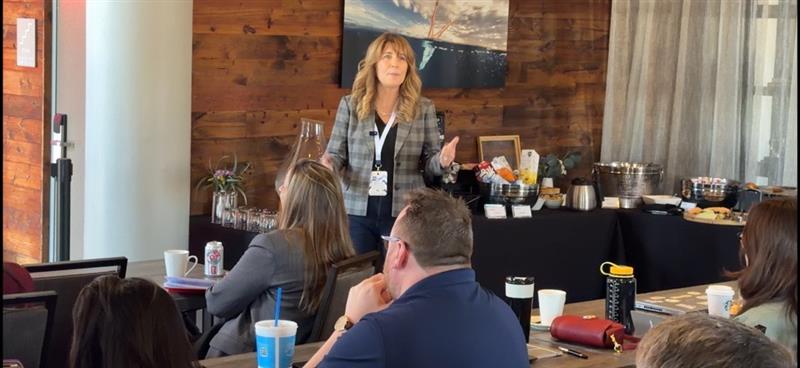
Kathy Rotondo from IAB took us through trends in deduction practices at major US retailers like Walmart, Target, and others.
Lauren Lieman, Twinings | Jacob Henry, Lala US | Jen Wilder, Utz Quality Foods
Our panel discussed strategies for researching deduction validity. They shared experiences and provided actionable tips regarding the role of sales in deductions, tracking down documentation, escalation processes for disputes, and more.
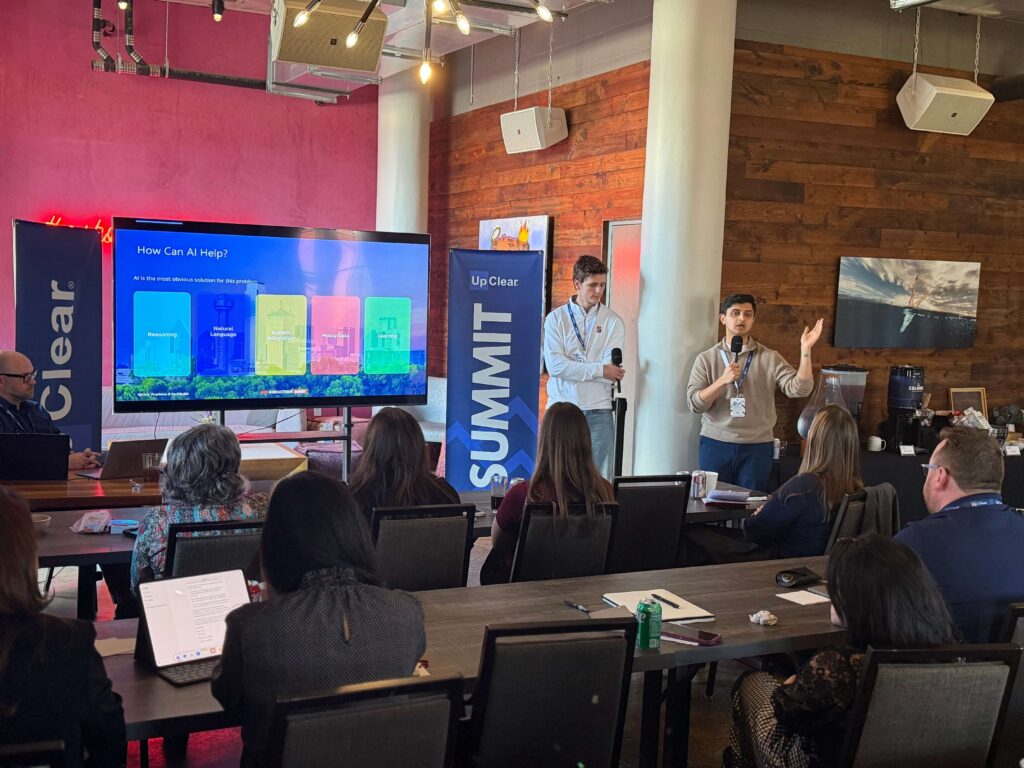
Amogh Agnihotri & Leon Micheel-Sprenger from Stanford University
Two Stanford Graduate School students presented their research on the emerging role of AI in deduction management. They walked through live use cases of an AI bot working through real deduction scenarios, demonstrating its potential in the CPG industry.
Kyle Barnholt, Founder & CEO at TrewUp
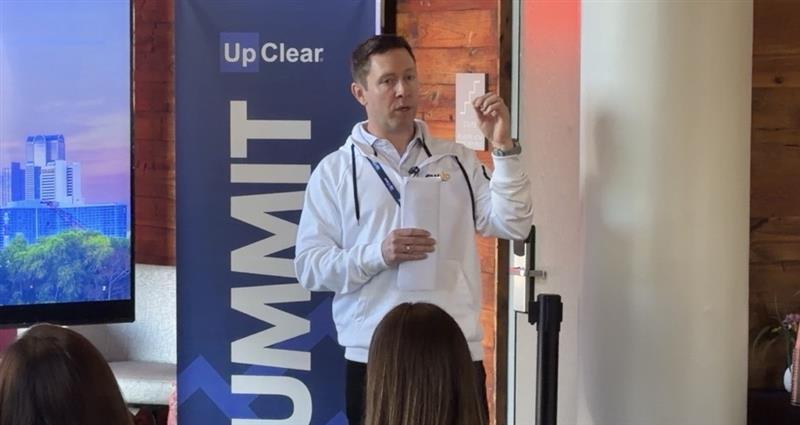
Distributors often deliver the most challenging forms of deductions. Many document formats. Many customers, products, and types of deductions all in one line item on your remittance. TrewUp’s Kyle Barnholt took us trends he’s observed at this type of customer.
Tanay Kothari, Founder & CEO at Floret
Tanay Kothari from Floret broke down the end-to-end deductions lifecycle — validation, approval, dispute, and cash application — and mapped it to a clear operating model across Ops, Finance, and Sales.
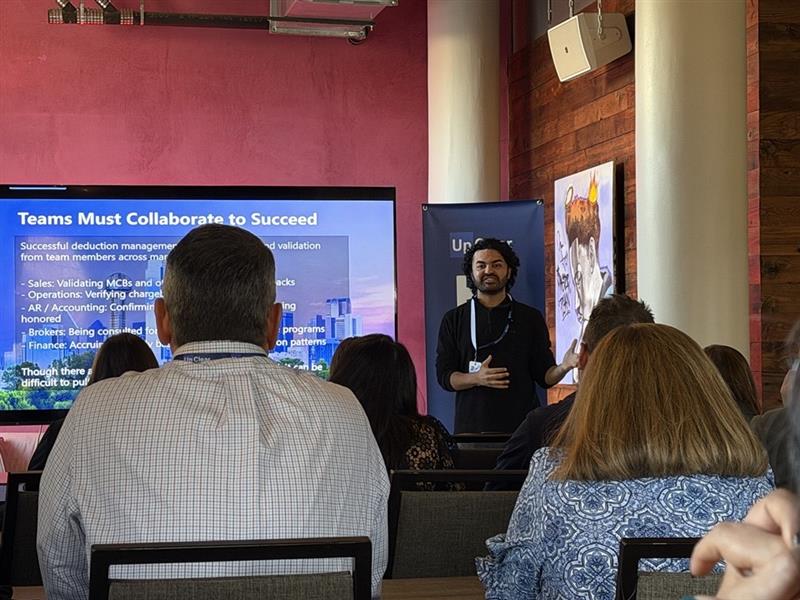
We discussed how teams design workflows that rely on smart delegation and automation to eliminate manual handoffs, recoup lost deduction dollars, and reduce time spent on data entry. The goal: a deductions process that’s fast, auditable, and collaborative.
Click below to access event materials. A password is required to access this page. Password has been sent to all event attendees. If password is needed, contact [email protected].
 | THURSDAY, FEBRUARY 26, 2026 |
 | DALLAS, TEXAS |
 | FOR REPRESENTATIVES OF CPG BRANDS* |
*Validated with email address. If you’re not with a brand and you’d still like to attend, please contact us using the question field below.