

The Landscape — Why Vendor Choice Matters More Than Ever
For mid-market CPG brands navigating the complexity of trade promotion, deductions, and revenue growth management, the vendor selection decision is high-stakes. Choose wrong, and you're looking at years of costly implementation, a platform that never quite fits, or worse — a vendor that goes out of business before you grow into theirs.
The market divides roughly into two camps: established long-term vendors built on legacy architecture that require heavy customization to deploy, and well-funded startups that lead with slick demos but lack the platform depth to handle real-world CPG complexity at scale.
UpClear sits in a third category entirely. And that's the point.
The market divides roughly into two camps: established long-term vendors built on legacy architecture that require heavy customization to deploy, and well-funded startups that lead with slick demos but lack the platform depth to handle real-world CPG complexity at scale.
UpClear sits in a third category entirely. And that's the point.
Who UpClear Is — And Why That Matters
Built Different from Day One
UpClear is a privately owned and self-sustaining company. That's not just a financial footnote — it's a strategic choice. When a software company is profitable without outside investment, every product decision is driven by one thing: what makes customers successful. .
Contrast this with the majority of UpClear's competitors across both the legacy and startup segments. Most carry significant private investment. Many carry debt, and some are not profitable. Right, wrong, or indifferent, their decisions are influenced by investor timelines, growth mandates, and sales commitments.
At UpClear, the customer is the product driver. Always has been. We can guarantee our decisions and roadmap are influenced only by the nuanced requirements of CPG sales, accounting, finance, and revenue management teams in the field. That's why BluePlanner has been continuously improved — not periodically reinvented for a new funding pitch.
Contrast this with the majority of UpClear's competitors across both the legacy and startup segments. Most carry significant private investment. Many carry debt, and some are not profitable. Right, wrong, or indifferent, their decisions are influenced by investor timelines, growth mandates, and sales commitments.
At UpClear, the customer is the product driver. Always has been. We can guarantee our decisions and roadmap are influenced only by the nuanced requirements of CPG sales, accounting, finance, and revenue management teams in the field. That's why BluePlanner has been continuously improved — not periodically reinvented for a new funding pitch.
Built for the World — Not Retrofitted for It
Global by Design Since 2008
For CPG brands operating across multiple markets, this is non-negotiable: was the platform designed for international use, or was it built for one market and patched for others?
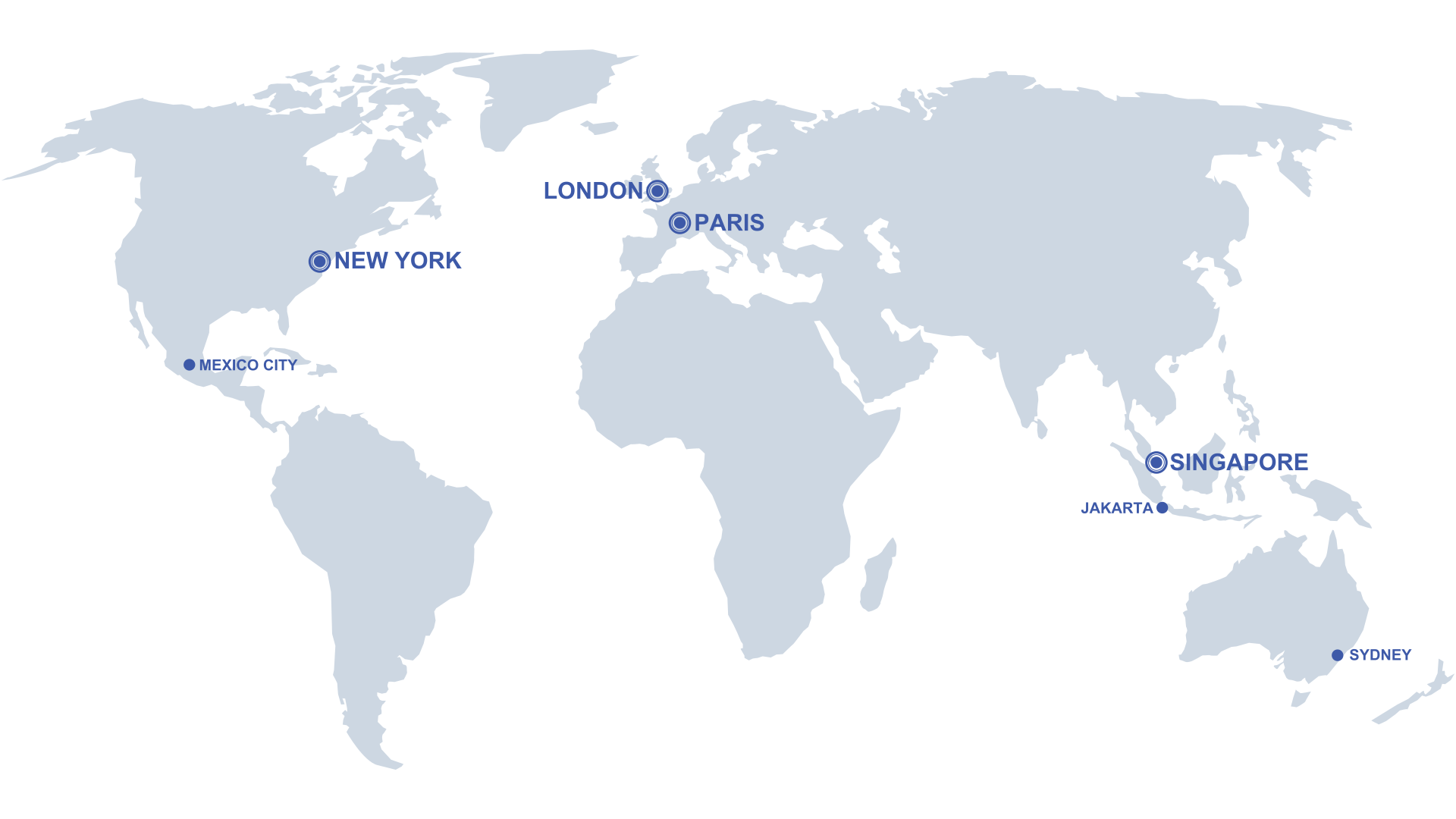
UpClear was founded in 2008 with a deliberate multi-market purpose and architecture. BluePlanner handles the structural complexity of international deployment — multiple currencies, varied retailer and distributor models, country-specific promotion mechanics, cross-market reporting and consolidation — because those requirements were baked into the platform from the start, not bolted on later. We augment this with local teams that support clients in different parts of the world.
This is a critical differentiator for brands with operations across North America, Europe, and the Asia Pacific region. Other vendors — regardless of their category — have had to stretch their platforms to accommodate global use cases. UpClear didn't. That means cleaner data, fewer workarounds, and a deployment experience that actually reflects how your business is structured.
UpClear was founded in 2008 with a deliberate multi-market purpose and architecture. BluePlanner handles the structural complexity of international deployment — multiple currencies, varied retailer and distributor models, country-specific promotion mechanics, cross-market reporting and consolidation — because those requirements were baked into the platform from the start, not bolted on later. We augment this with local teams that support clients in different parts of the world.
This is a critical differentiator for brands with operations across North America, Europe, and the Asia Pacific region. Other vendors — regardless of their category — have had to stretch their platforms to accommodate global use cases. UpClear didn't. That means cleaner data, fewer workarounds, and a deployment experience that actually reflects how your business is structured.
For Upper Mid-Market Brands — Why SaaS Wins Over Customization
Speed to Value vs. Years in Implementation
At the upper end of the mid-market, brands often consider the established long-term vendors in the TPM/RGM space. And on paper, the feature lists look impressive.
What the feature list doesn't tell you is that those platforms are largely custom-built for each deployment.
Legacy vendors in this space routinely operate on implementation timelines measured in years — not months. Why? Because their architecture requires deep customization to fit each client's specific workflows, data models, and edge-case requirements. Every unique ask adds scope. Every scope addition adds time. Every time addition adds cost. And by the time the platform is live, the business has already changed.
What the feature list doesn't tell you is that those platforms are largely custom-built for each deployment.
Legacy vendors in this space routinely operate on implementation timelines measured in years — not months. Why? Because their architecture requires deep customization to fit each client's specific workflows, data models, and edge-case requirements. Every unique ask adds scope. Every scope addition adds time. Every time addition adds cost. And by the time the platform is live, the business has already changed.
UpClear operates on a fundamentally different model
It's a true SaaS solution — configured, not custom-coded. This means:
- Faster deployment — measured in weeks and months, not years
- Shared infrastructure — every customer benefits from platform improvements simultaneously
- Predictable costs — no surprise professional services overruns
- Continuous updates — the platform evolves without requiring a new implementation project
The right fit for BluePlanner at this level is a brand that is ready to commit to a best-practice-driven approach — one that recognizes the value in adopting an industry-refined SaaS platform as-is, rather than demanding a custom replica of however things were done before. That's not a compromise. That's maturity.
For brands that require niche, edge-case functionality that no standard platform would ever build for a single client — legacy vendors may accommodate that ask. But they'll make you pay for it in time, dollars, and implementation pain.
For brands that want to be live and driving value within months, BluePlanner is the answer.
For Emerging & Growing Brands —
Why Depth Beats Demo
Flashy Demos. Real-World Gaps.
At the lower end of the mid-market, a new generation of startup vendors has entered the space. They're well-designed. They demo well. They appear to be easy to use. They often lead with modern UX, AI buzzwords, and fast sales cycles. And for very early-stage brands with minimal complexity, they may check the initial boxes.
But CPG trade promotion and gross-to-net management is not a simple problem.
The moment a growing brand starts layering in the real complexity of the business — multi-tier distribution, complex deal structures, accrual management, deduction workflows, account-level P&L, S&OP integration, scenario planning — the gaps emerge. And they emerge fast.
We've seen this play out repeatedly. Brands initially select one of these platforms based on an impressive demonstration, only to find that what looked like capability in a sandbox doesn't perform in production. A well-known natural food brand — one with significant retail distribution and rapid growth — made exactly this move. After investing time and resources into onboarding with a startup vendor, they found that business-critical needs simply weren't met. They came to UpClear. And they didn't look back.
But CPG trade promotion and gross-to-net management is not a simple problem.
The moment a growing brand starts layering in the real complexity of the business — multi-tier distribution, complex deal structures, accrual management, deduction workflows, account-level P&L, S&OP integration, scenario planning — the gaps emerge. And they emerge fast.
We've seen this play out repeatedly. Brands initially select one of these platforms based on an impressive demonstration, only to find that what looked like capability in a sandbox doesn't perform in production. A well-known natural food brand — one with significant retail distribution and rapid growth — made exactly this move. After investing time and resources into onboarding with a startup vendor, they found that business-critical needs simply weren't met. They came to UpClear. And they didn't look back.
Why Does This Happen?
Because you cannot build deep, reliable CPG software capability overnight. Not with a talented team. Not with modern technology. Not even with AI.
The complexity of CPG gross-to-net management is a product of thousands of real-world use cases encountered over years of live deployments across hundreds of customers. Every edge case that gets solved makes the platform smarter. Every new customer requirement stress-tests the architecture. Over time, a platform either proves its depth — or it exposes its limits.
UpClear has been building that depth since 2008. BluePlanner has evolved through five major versions, each one shaped by real customer needs, real failure modes, and real lessons learned in production environments. That institutional knowledge is not replicable in three years of investor-backed development.
The complexity of CPG gross-to-net management is a product of thousands of real-world use cases encountered over years of live deployments across hundreds of customers. Every edge case that gets solved makes the platform smarter. Every new customer requirement stress-tests the architecture. Over time, a platform either proves its depth — or it exposes its limits.
UpClear has been building that depth since 2008. BluePlanner has evolved through five major versions, each one shaped by real customer needs, real failure modes, and real lessons learned in production environments. That institutional knowledge is not replicable in three years of investor-backed development.
UpClear's Unique Ability: Start Simple. Scale Sophisticated.
Startup vendors often compete by saying they're easier to start with. That may be true — but what they don't say is that the sophistication a growing brand will eventually need simply doesn't exist in their roadmap yet. They'll need to build it. For you. On your timeline. On your dime.
With BluePlanner, the simplicity at the start and the sophistication at the end are both already there. A brand can onboard at the right level of complexity for where they are today and expand into more advanced RGM capabilities — scenario planning, customer P&L, advanced analytics, AI-assisted deduction management — as their business grows. Those capabilities aren't on a future roadmap. They exist in the platform now.
With BluePlanner, the simplicity at the start and the sophistication at the end are both already there. A brand can onboard at the right level of complexity for where they are today and expand into more advanced RGM capabilities — scenario planning, customer P&L, advanced analytics, AI-assisted deduction management — as their business grows. Those capabilities aren't on a future roadmap. They exist in the platform now.
A Track Record of Continuous Innovation
19+ Years. Five Versions. Still Accelerating.
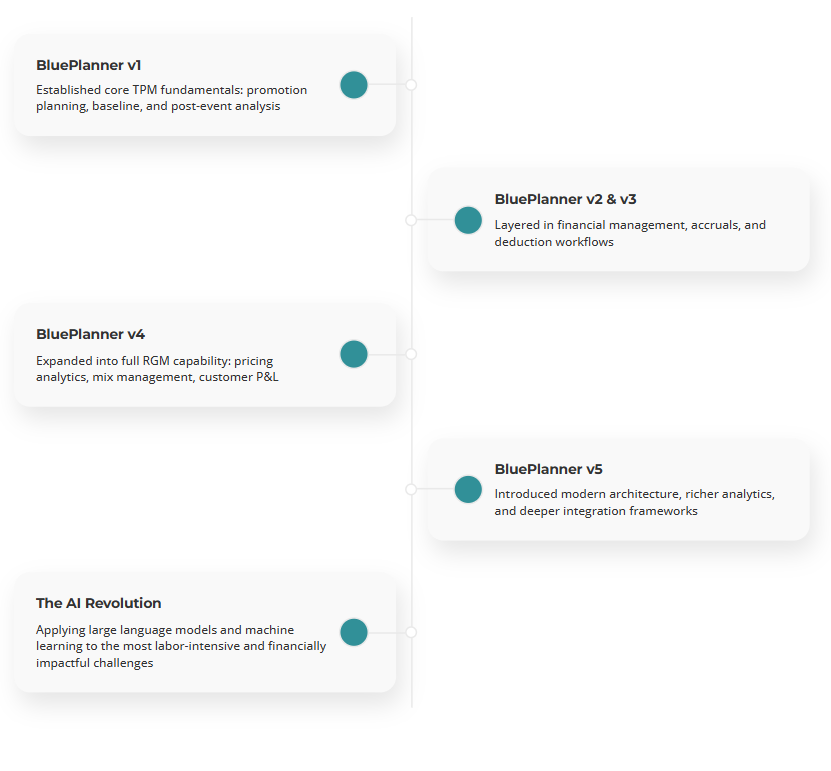
BluePlanner didn't arrive fully formed. It has evolved and grown over years of development, hundreds of customer, thousands of use cases, millions of promotions, billions of dollars of revenue:
BluePlanner v1 — Established core TPM fundamentals: promotion planning, baseline, and post-event analysis
v2 & v3 — Layered in financial management, accruals, and deduction workflows
v4 — Expanded into full RGM capability: pricing analytics, mix management, customer P&L
v5 — Introduced scalable and dynamic infrastructure and API-based modern software architecture, also including richer analytics and flexible integration frameworks
Each version reflected not just technology improvement, but accumulated CPG domain intelligence — the kind that only comes from being embedded in customers' businesses across market cycles, retailer shifts, and regulatory changes.
BluePlanner v1 — Established core TPM fundamentals: promotion planning, baseline, and post-event analysis
v2 & v3 — Layered in financial management, accruals, and deduction workflows
v4 — Expanded into full RGM capability: pricing analytics, mix management, customer P&L
v5 — Introduced scalable and dynamic infrastructure and API-based modern software architecture, also including richer analytics and flexible integration frameworks
Each version reflected not just technology improvement, but accumulated CPG domain intelligence — the kind that only comes from being embedded in customers' businesses across market cycles, retailer shifts, and regulatory changes.
The AI Revolution
And today? UpClear is actively deploying AI — applying large language models and machine learning to the most labor-intensive and financially impactful challenges in CPG customer management, accounting, and finance. It is present in forecasting and deduction management, but this is just the start. The depth and breadth of our technology, coupled with the latest AI techniques, puts us in a unique position to provide arguably the most complete capabilities to the industry.
That's the UpClear difference: a company that has been innovating continuously for nearly two decades, funded by customer success rather than investor enthusiasm, with a platform that proves its value every day across a global customer base.
That's the UpClear difference: a company that has been innovating continuously for nearly two decades, funded by customer success rather than investor enthusiasm, with a platform that proves its value every day across a global customer base.
The Bottom Line
The Right Partner for the Right Stage
For mid-market CPG brands that are serious about gross-to-net excellence — not just checking a software box — UpClear represents something rare: a vendor whose incentives are perfectly aligned with yours, whose platform reflects nearly two decades of real-world CPG learning, and whose SaaS model means you get faster value, lower risk, and a platform that keeps getting better long after go-live.
That's not a sales pitch. That's a track record.
That's not a sales pitch. That's a track record.

| Legacy Long-Term Vendors | Startup Vendors | UpClear / BluePlanner | |
|---|---|---|---|
| Business Model | Custom-built, facilitated by high fees | VC-backed | Self-sustaining |
| Typical Clientele | "Tier 1" Large, multi-billion dollar brands | Small startups & emerging brands | Mid-market emerging & growing brands, Tier 1 brands in international markets |
| Global Architecture | Retrofitted | Single-market | Multi-market from Day 1 |
| Depth of CPG Capability | Deep (at high cost) | Surface-level | Deep, expanding continuously |
| Growth Path | Fixed at go-live | Uncertain roadmap | Scales with your business |
| Deployment Time | Years | Months (limited scope) | Months (full scope) |
| Innovation Model | Periodic, client-funded | Feature racing | Continuous, customer-driven |
About UpClear
At UpClear, our mission is to empower Consumer Goods brands to maximize revenue performance and trade investment returns through intelligent, collaborative software—providing a single source of truth, streamlined automation, and actionable insights.
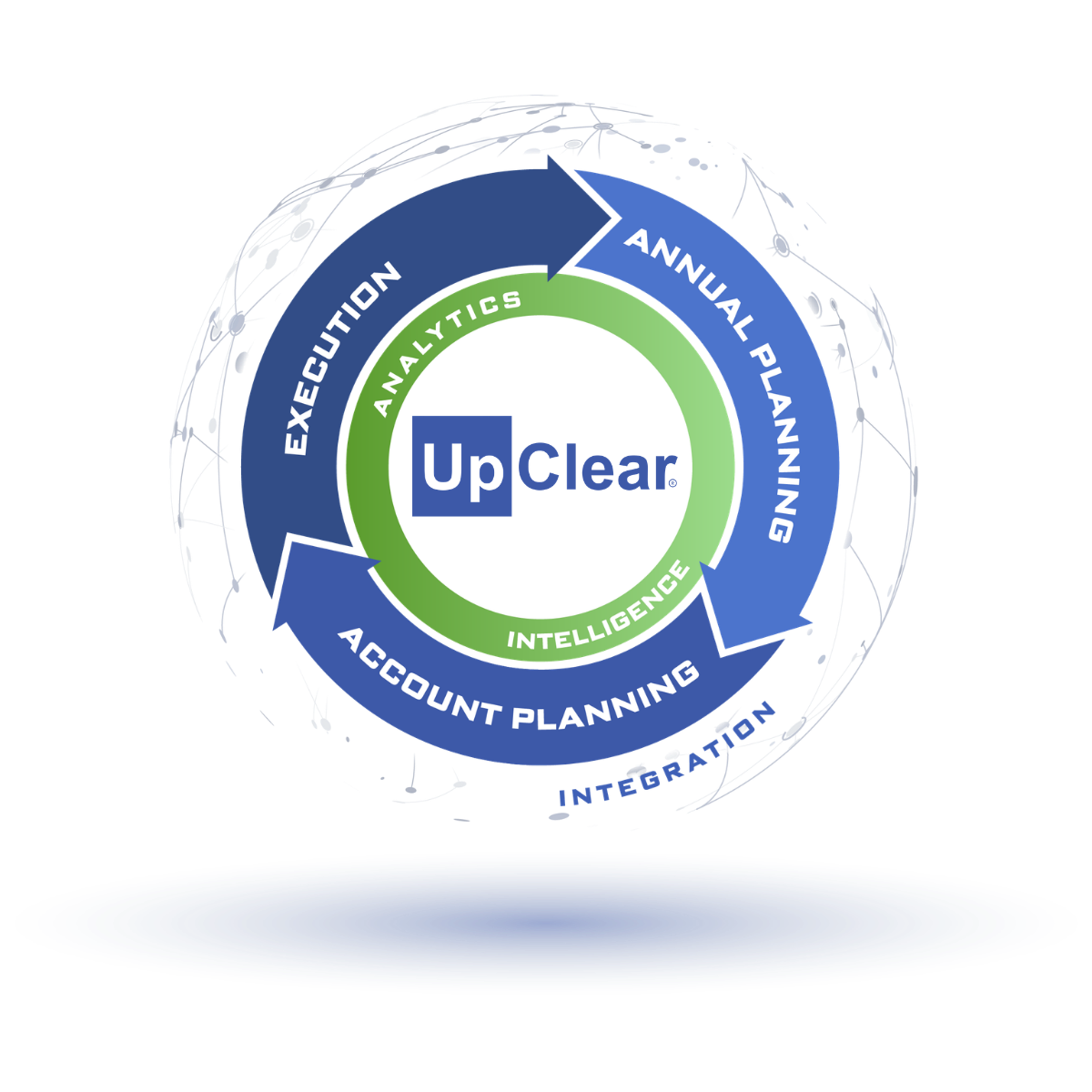
BluePlanner Revenue Management software supports end-to-end processes, from Annual Operating Planning to Account Planning and Execution.