
Deductions are one of the biggest sources of frustration for CPG trade and finance teams. Backlogs pile up, disputes drag past their windows, and revenue slips away in the process. AI is already starting to change that picture, for better and for worse.
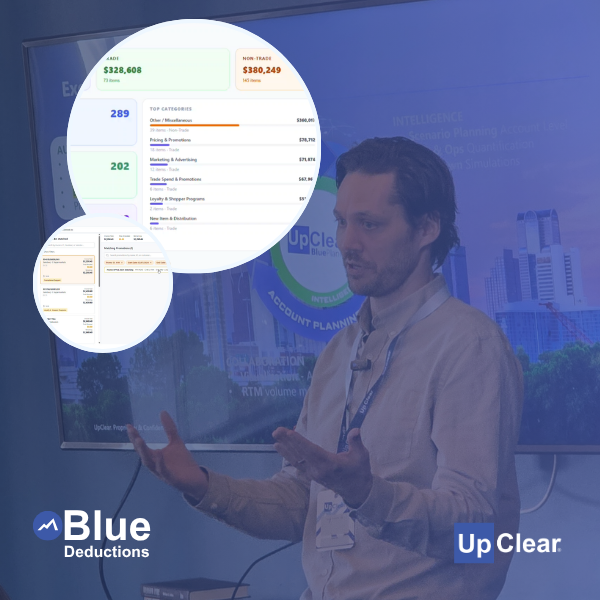
We recently hosted a live webinar, "How AI Is Transforming Deductions in CPG.” At this virtual event, UpClear’s Product Marketing Manager Tim Wentz and Director of Product Andrew Dentinger, shared some of our research findings, dug into the inner workings of generative AI, and walked through how UpClear is applying the latest tech to help clients tackle deductions today.
The State of Deductions in 2026
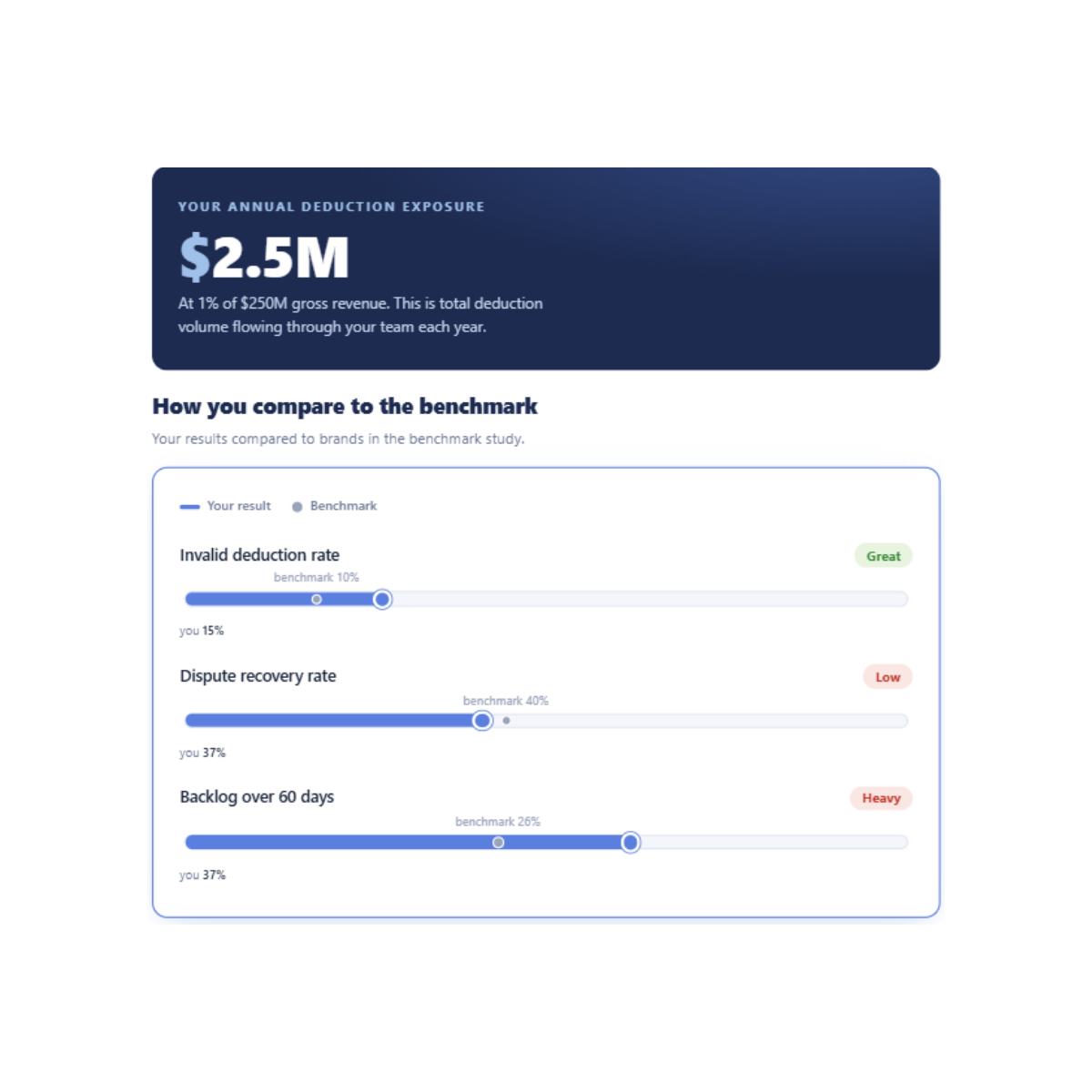
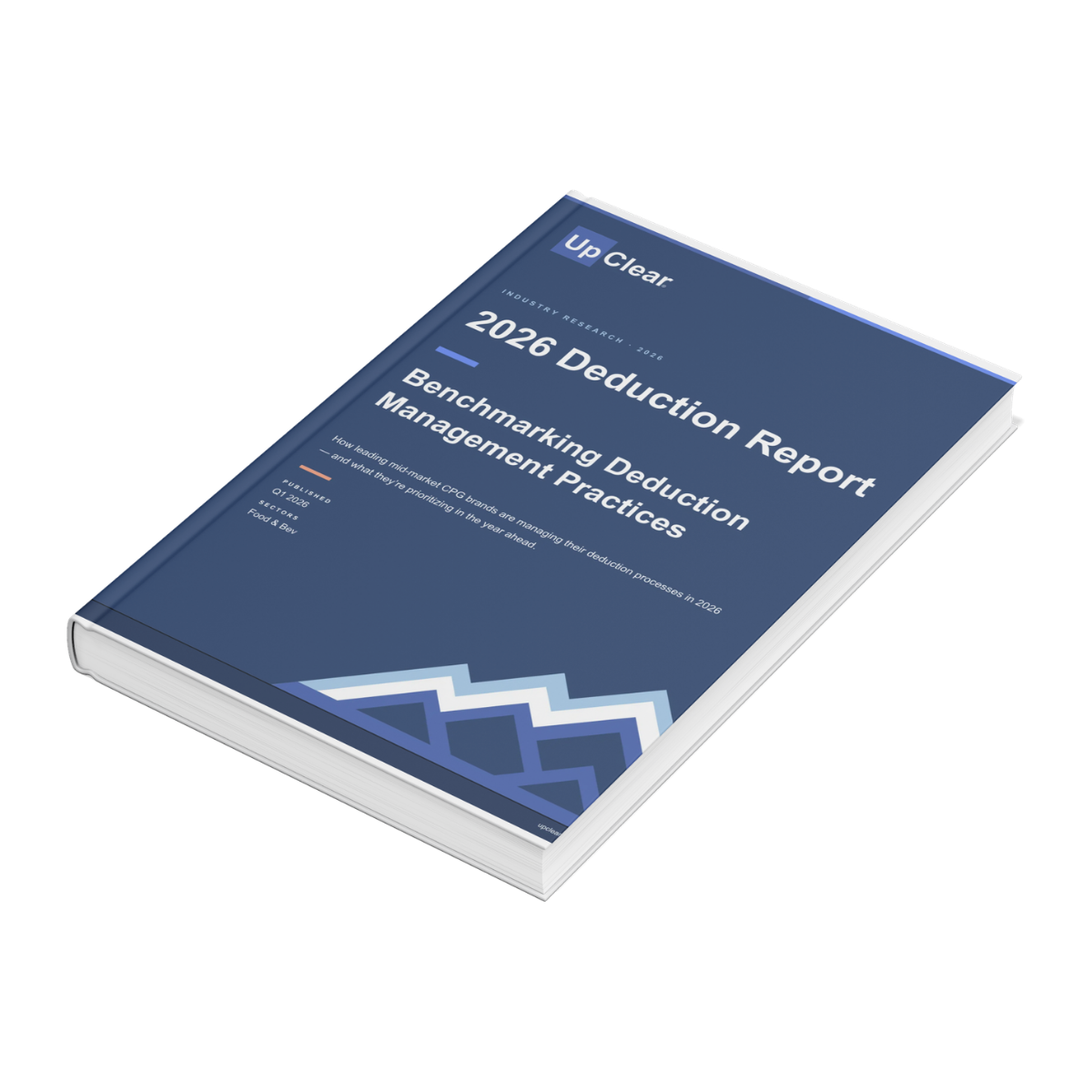
The session opened with a review of UpClear's Deduction Benchmark Report from earlier this year. Net promoter scores show clear dissatisfaction with current tools, processes, and field sales collaboration.
Deduction aging is a big part of the problem. On average, only 20% of deductions are resolved within 15 days. Zooming out, just 48% are cleared within the first 30. That means roughly half of all open deductions at any given time are more than a month old.
Write-off rates tell a similar story. About 45% of respondents wrote off more than 10% of their deductions. With industry benchmarks estimating deductions make up 5 to 15% of gross sales, that adds up fast.
The root causes are familiar: too much manual work, a lack of real-time data, and short dispute windows. All of this is compounded by limited resources and tooling. The result is revenue leakage, as valid disputes go unfiled and invalid deductions slip through unnoticed.
The Role of AI in CPG and Deductions
AI technology has a much deeper history than the LLMs we use today. Andrew shared a bit about the technology’s early applications, beginning with statistical modeling and evolving through machine learning, deep learning, and now generative models.
For most of RGM and forecasting, we've long advised that the biggest practical opportunity lies in statistical models and traditional machine learning. While generative AI is more technically impressive, it’s not well-suited to the CPG data environment.
For instance, two years of syndicated data history for a single SKU is only about 104 observations. That’s considered a solid dataset in this world, but it's not much to work with by AI standards.
| Technology | Statistical Models | 'Traditional' Machine Learning | Deep Learning | Generative Models |
|---|---|---|---|---|
| Required data | Hundreds/Thousands | Thousands/Millions | Millions | Millions/Billions |
| Cost | Low | Low/Medium | Medium/High | High |
| Explainability | Very high | High | Low | Very Low |
| Examples | Regression | Decision Tree | Neural Network | Large Language Model |
Deductions are a different story. The deduction space is much more data-rich, with tens of thousands of documents generated every day across carriers, internal systems, retailers, distributors, and banks. The volume and structure provide much more fuel for LLMs, which is why we believe it’s ripe for automation. It’s also why we've seen so much outside investment flow into intelligent document processing over the past couple of years.
What Is Generative AI?
Using generative AI in your day-to-day is one thing, but it’s also helpful to understand what’s happening behind the scenes. Andrew walked through the process a chatbot undergoes when you ask a question like, "On a Walmart deduction, what does deduction code 24 mean?"
First, your question gets broken into small chunks through a process called tokenization. Those chunks get sent into a transformer, the architecture behind most modern AI tools and one of the defining technical breakthroughs of the past decade.
The transformer processes that information and produces a probability distribution across possible next words. From there, it recommends the most likely one. That word gets added back into the sequence, and the whole process runs again to generate the next word, and the next, until the full response is built out one word at a time.
A key point Andrew emphasized is that the model is generating a new answer with a fresh calculation at every single step. Compared to traditional search, which pulls up pre-written results, this is computationally expensive and inherently non-deterministic. Ask the same question twice and you may get two entirely different answers. Much of the current work across the industry is focused on making these outputs more consistent and predictable.
How Blue Deductions Uses This Technology
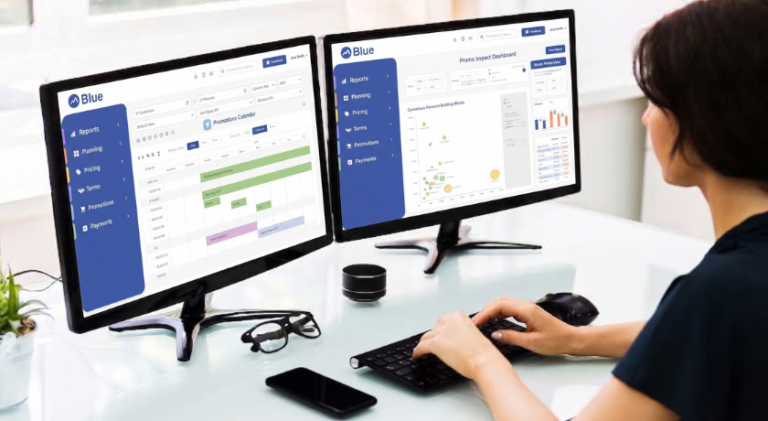
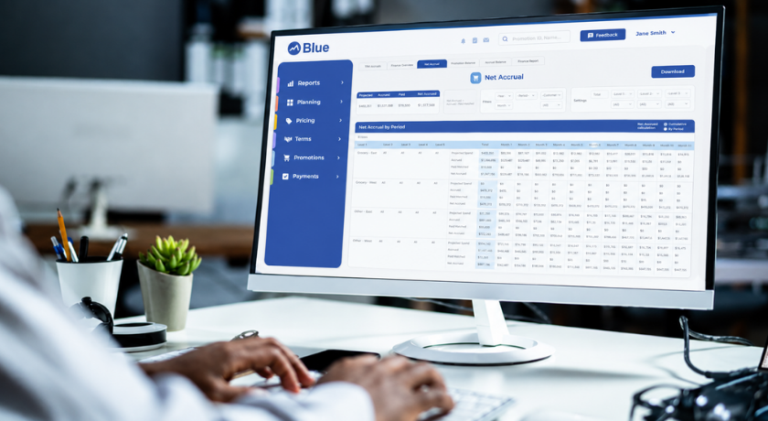
At UpClear, we've applied this technology across several stages of the deduction lifecycle within Blue Deductions.
On the acquisition side, we use automated portal scraping to pull deduction and remittance data directly from retailer and distributor portals. We also use credential management to keep that process running reliably over time.
From there, a multi-step pipeline identifies document type, extracts header and line item details, and links related documents together. It connects ASNs, PO numbers, and invoice numbers across sources so the full picture of a claim comes together automatically.
For clients already using Blue Planner, that extracted data is matched against your promotions natively. It uses tags and identifiers pulled straight from the documents to speed up matching and clearing.
On resolution, we use machine learning to score claims by confidence level, indicating whether a deduction is likely worth disputing. We also support complete form automation, prefilling the dispute forms retailers require, along with LLM-generated dispute reasoning that you can review, edit, or regenerate before it's submitted.
Deductions is part of our broader Blue RGM intelligence platform, connected through the Bridge solution. That means your trade promotion data in Blue Planner is seamlessly linked to the deductions module. With this connected ecosystem, you can trace a claim from trade promotion all the way through to resolution. Blue Deductions can also be used on its own, integrated with a separate TPM system.
Today, we support retailers and distributors including Target, Unified, Kroger, Amazon, and Walmart, with more coverage being added as we work with clients to define their needs. Clients using this technology are seeing meaningful results, with labor savings averaging around 48 hours per week, depending on the scope of deployment and the volume of deductions involved.
Our Philosophy: Human-Centric by Design
In addition to the major strides of AI technology, Andrew also got into the limitations of where it stands today. This understanding has shaped how we’ve built Blue Deductions, along with our vision of where it’s headed.
Every AI-driven step in a process carries some probability of error. Individually, that might look small. Document classification, for example, runs at around 98% accuracy on its own. However, when you chain several steps together into a fully autonomous process, those small error rates compound. In real-world testing, that 98% single-step accuracy dropped to roughly 90% once classification, extraction, and categorization were run end to end.
The math behind this is the same logic as flipping a coin three times in a row: each flip alone is a 50/50 shot. In turn, the odds of getting the same result three times running drops to 12.5%. Run enough steps in sequence, even at a high per-step accuracy, and the overall reliability erodes quickly. At 95% accuracy per step, four steps in a row already produces close to a 19% error rate.
That's why we don't believe in trying to fully automate deductions end to end using today's technology. Instead, we build with human-centric design in mind, applying automation where the cost of manual review clearly outweighs the cost of an occasional error. We retain a human checkpoint every few steps to make sure everything is working as expected. AI moves the process forward faster, but people stay in the loop where judgment matters most.
Go Deeper Into Deductions
This recap only scratches the surface. Watch the full session for a more in-depth discussion, a live product demo, audience Q&A, and more.
More Free Deduction Resources from UpClear
2026 Deduction Benchmark Report
CPG Deduction Recovery Calculator