
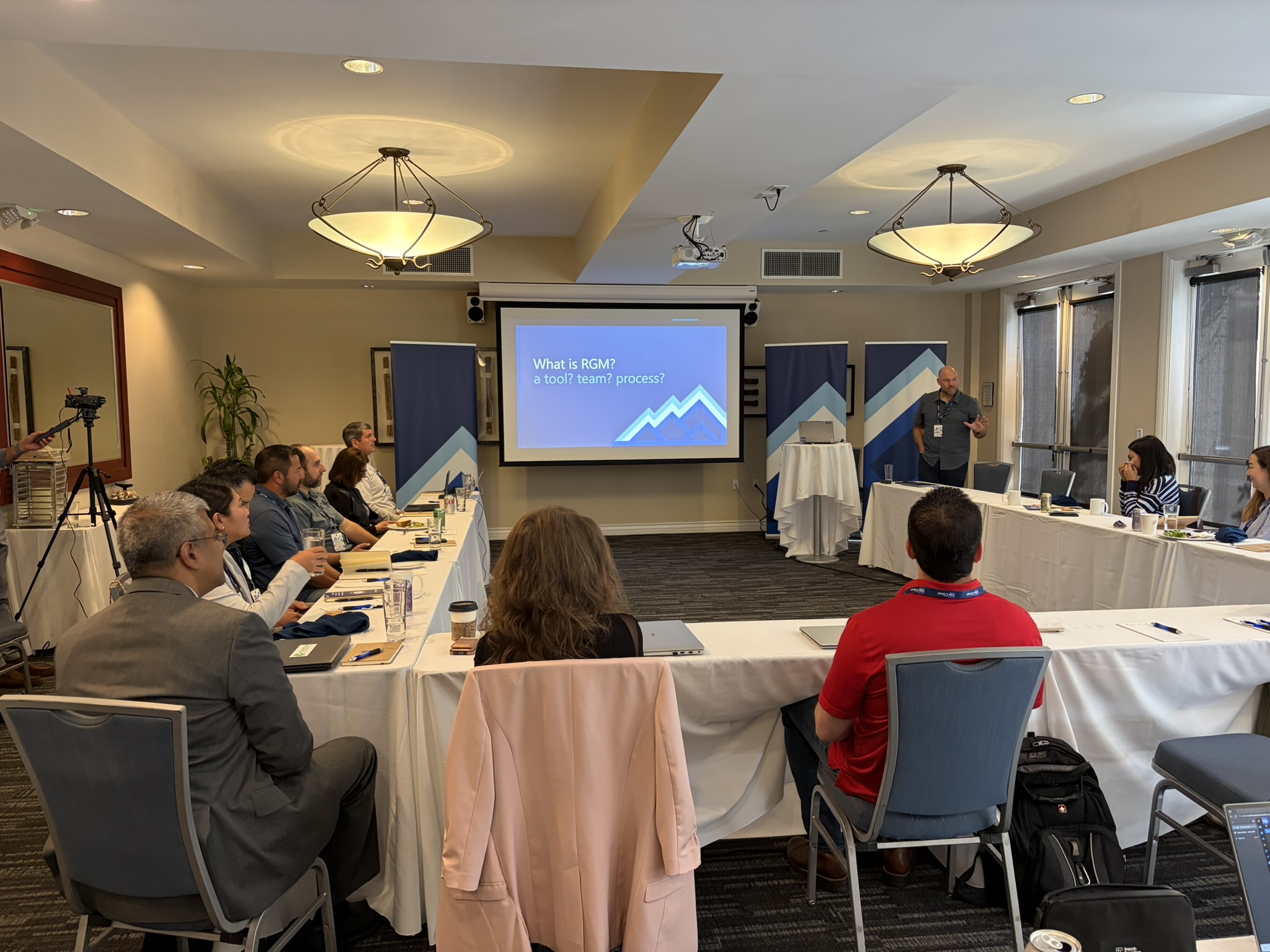
On October 13, 2026, UpClear hosted its CPG RGM Summit at the Beach House Hotel in Hermosa Beach, California. The half-day event centered on a constraint most RGM content skips: little or no dedicated team, a modest software budget, and a short runway. Commercial, RGM, trade marketing, and finance leaders from CPG brands gathered to work through how to make an impact when resources are limited.
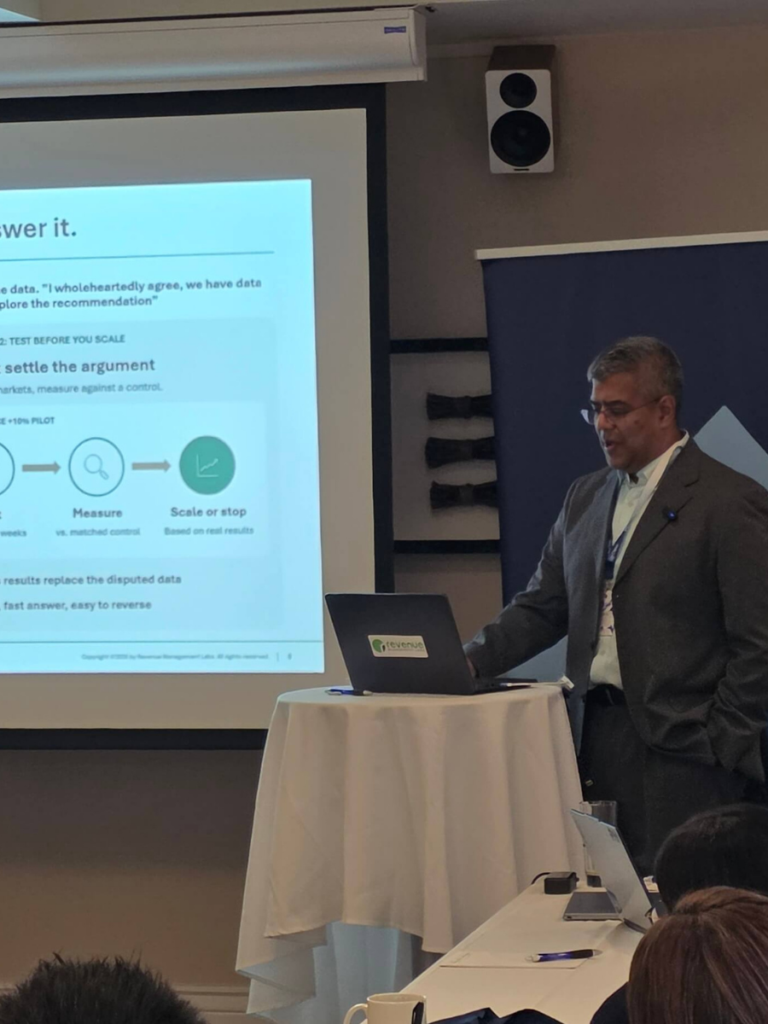
Attendees started the afternoon with the session “RGM Without the RGM Team: Results Blueprint,” led by Avy Punwasee of Revenue Management Labs. UpClear’s Director of Marketing. UpClear’s Kurt Kaiser followed up with a look at the state of RGM, backed by the results of the 2026 RGM Report. Between and after sessions, attendees engaged in a “town hall”-style discussion about how to put these learnings into practice.
Here are the main takeaways from the day.
Adding headcount doesn’t automatically raise RGM impact. Avy described a pattern Revenue Management Labs sees across companies of every size. A large team can cover every channel and practice with advanced modeling and polished dashboards.
At the same time, a small team may get by with scrappier reporting and tools, but its resources are stretched across several areas. In the end, either of them can still miss on strategy, resulting in low or even negative impact.
Kurt shared results from UpClear’s RGM benchmark that supported this idea. While the report uncovered some interesting ROI drivers, neither company size nor team size showed a strong correlation with business impact from RGM.
Out of all of the RGM levers that his team recommends, Avy says that price adjustments are #1. In his experience, a 1% price move is almost pure margin based on where price elasticity is for most brands.
However, the ensuing discussion showed how tricky a price move can be in practice. Some attendees shared how their attempts to increase prices have been eroded with concessions. Another said that their team is already trying to manage negotiations for discounts, so a raise seems out of the question.
Avy’s take is that price increases don’t need to happen across the board. The opportunity lies in finding where leverage exists in the portfolio. That may be by customer, period, or promotion discount depth (promoted price is still pricing).
You don’t want to make decisions based on bad data, but chasing perfect data can stall progress. Inconsistent product names, conflicting definitions of net sales, outliers, missing weeks, and mismatches between syndicated and financial data make perfect an unreachable goal.
Avy shared how you can determine “good enough” in your data:
Oftentimes, the last stretch of data cleansing is the costliest, with very little marginal return. Moving from 95% to 99% clean can take months without changing the decision.
Avy demonstrated this concept in a discussion about determining price elasticity— a calculation that can get very complicated. He recommended using break-even elasticity as a quick way to test confidence.
To do so, you calculate the outcome of your planned move at a range of price elasticity levels. Then, you compare the break-even point, at which the ROI is zero, against your estimated number. If there’s a decent amount of buffer (e.g. break-even is -2.2 and your estimate is -1.5), you can confidently make the move. However, if the numbers are much closer together, it’s worth digging deeper to get a more precise calculation.
A strong RGM strategy can’t be built or executed in a silo. Avy’s advice for lean teams was to borrow expertise that already exists in the business:
From there, the aim is to scale through guardrails, training, and self-serve tools so the business can apply pricing and discount rules without a review each time.
Not only does this help you tackle a broad range of RGM challenges, but it also helps you build the influence you need to make an impact across the organization. Avy shared how crucial it is to reach beyond KPIs and leverage effective communication strategies. The combination of analysis and storytelling is essential to success.
Avy emphasized that the “blocking & tackling” of RGM can return tangible, meaningful results. Following a few principles, you can adopt a RGM methodology. Assess the following four areas, and prioritize the greatest opportunity for your business.
The right tools help you assess the current landscape and execute changes. Avy highlighted the net sales bridge for breaking down RGM impact. In his example, he showed how you can break down the revenue impact into individual categories: gross rate, trade, region mix, national account mix, brand mix, product line mix, and volume.
By displaying data in this way, you can get a clearer breakdown of why revenue moved the way that it did. It can also reach beyond your RGM bubble to spark the right discussions with leadership and other teams.
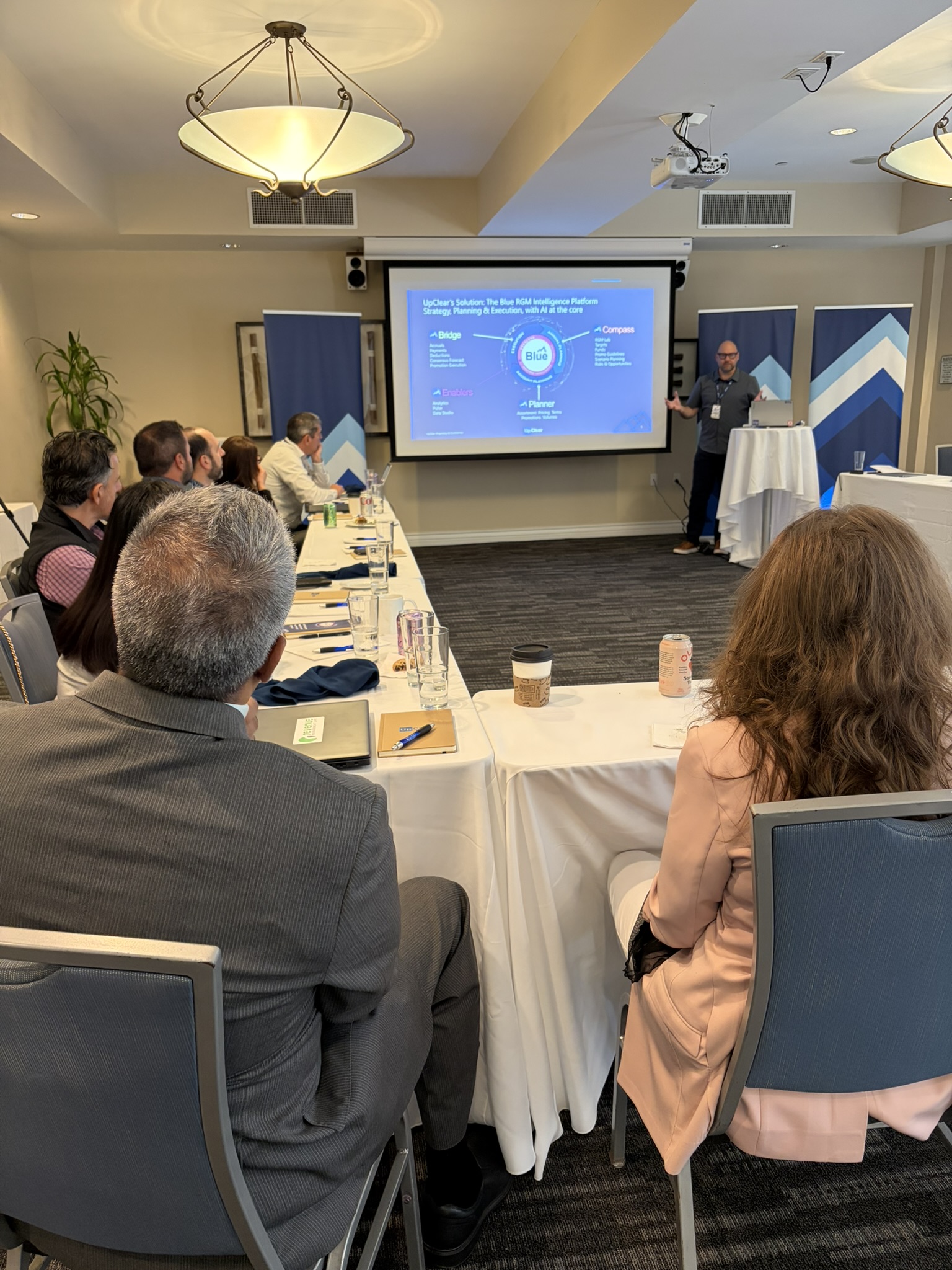
Kurt demonstrated how this ties into functionality available in Blue RGM:
UpClear’s 2026 RGM Benchmark Report covers the survey results behind some of the data findings we shared at the Summit. Request your copy of the report to get the full picture.
Next time, don’t just read the summary— be in the room. Pre-registration is open now for the 3rd annual CPG Deduction Summit in Dallas, TX in February, 2027. Get more details, and let us know if you’d like to attend!
Are you interested in a clear, focused overview of how FMCG/CPG are actually tackling RGM? Contribute to our benchmark!
By taking part, you’ll get early access to insights that help you: a) See how your RGM setup compares to peers, b) Understand trends in pricing, promotions, and trade investment, c) Identify capability gaps for 2026/2027 planning, d) Learn which tools, analytics, and KPIs are becoming standard, and e) See where other companies are investing next.
The survey takes 8–10 minutes, and all responses are anonymous unless you decide to share your contact information with us.
We’re already hard a work planning 2026 events. Check out the line-up here!

UpClear is a software company and maker of Blue, an intelligence platform used by Consumer Goods brands. We deliver a holistic Revenue Growth Management solution, including capabilities for TPM, TPO, IBP, and RGM. Our mission is to empower brands to maximize revenue performance and trade investment returns through intelligent, collaborative software— providing a single source of truth, streamlined automation, and actionable insights.
The Blue RGM Intelligence Platform supports end-to-end gross-to-net revenue management processes: Annual Operating Planning, Account Planning, and Execution. Solutions are woven together with analytics, artificial intelligence, and data management that connects teams and business systems.